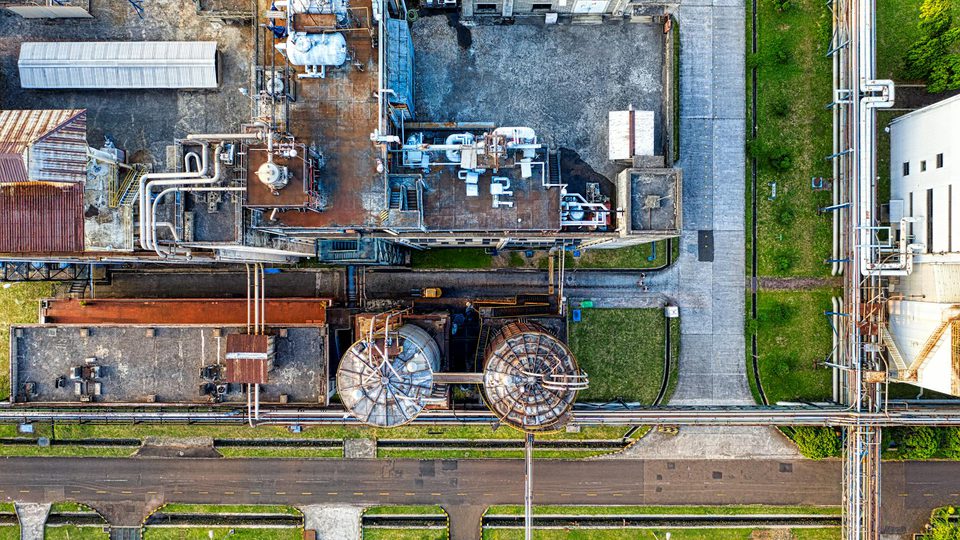
Critical infrastructure protection is often discussed as if it were a generic high-security template. In practice, it is a consequence-driven design problem. A water plant, a grid substation, a refinery control area, and a communications hub may all count as critical infrastructure, but the operational consequences of disruption, the geographic footprint, and the sensing priorities are not the same.
CISA’s critical infrastructure framework is useful here because it treats security and resilience together. The question is not only whether an asset can detect an intrusion, but whether the organization understands the asset’s role, dependencies, and recovery implications well enough to design meaningful protective measures around it.
Start with Consequence and Dependency
Before selecting surveillance equipment, planners need to map what the site actually protects. That usually includes:
- high-consequence physical assets,
- control rooms or operations spaces,
- utility dependencies,
- access routes and maintenance patterns,
- and the operator decisions that must happen during an incident.
This matters because a camera or radar that technically covers a fence line may still miss the true decision point. If the real concern is loss of substation continuity, unsafe access to a control building, or unauthorized activity near a hazardous process area, the sensing plan should be built around those consequences.
Why Resilience and Security Have to Be Designed Together
One persistent mistake in infrastructure projects is splitting physical security and resilience planning into separate workstreams. Security teams think about intrusion and sabotage. Operations teams think about uptime and continuity. In a real incident, those become the same problem very quickly.
For that reason, surveillance design should support questions such as:
- which asset is affected,
- what process or service depends on it,
- what the operator must verify next,
- and whether the event justifies a local response, a wider operational adjustment, or a continuity action.
Security without continuity planning is incomplete. Continuity planning without security context is also incomplete.
A Useful Protection Architecture
The table below is a synthesized planning aid.
| Layer | What it does for critical infrastructure | Common failure mode |
|---|---|---|
| Perimeter and approach sensing | Detects movement before an actor reaches sensitive assets | Covering boundaries but not likely approach paths or standoff areas |
| Verification sensors | Confirms identity, behavior, and incident severity | Creating alerts that operators cannot validate quickly |
| Command and logging layer | Correlates alarms, maintains audit history, and guides escalation | Treating each subsystem as a separate island |
| Resilience and response procedures | Defines who acts, what gets isolated, and how continuity is preserved | Assuming detection automatically creates response readiness |
CISA’s critical infrastructure services and assessment programs reflect this layered logic. Assessment tools are useful because they help owners connect site protection, dependency analysis, and operational decision-making rather than focusing only on hardware selection.
Why Asset Geometry Matters
There is no universal “critical infrastructure sensor stack.” Long linear corridors, compact campuses, waterfront sites, and elevated plant structures all change the right mix of radar, optics, passive sensing, and access-control integration. The disciplined approach is to begin with geometry, consequence, and operator workflow, then decide which sensing layer adds the most usable time and clarity.
This is important because a fence-focused design may still miss:
- rooftop or waterside approaches,
- standoff areas near hazardous processes,
- blind zones near maintenance routes,
- or the true asset clusters that determine recovery difficulty.
Why the Command Layer Matters
Critical infrastructure sites often accumulate subsystems over time. Cameras, access control, perimeter alarms, radios, and site sensors may all exist, but if they remain operationally disconnected, the site still struggles during a real incident.
A strong command layer helps answer:
- whether several alerts belong to the same event,
- which assets are at risk,
- what the operator should verify next,
- and whether the event should trigger a continuity or safety procedure.
This is why the command layer is part of infrastructure protection rather than an optional convenience.
Assessment Only Matters if It Changes Operations
Assessment frameworks are useful only when they drive real changes in coverage, staffing, escalation, and resilience posture. A site can complete a formal assessment and still remain weak if the findings do not change how the organization senses, triages, and responds.
That is why critical infrastructure protection should be evaluated by whether it improves:
- earlier awareness,
- faster verification,
- cleaner escalation,
- and more resilient recovery decisions.
What Good Protection Design Looks Like in Practice
A mature critical-infrastructure protection plan normally links surveillance zones to operational decisions. In practical terms, that means the site knows which areas justify early warning, which alerts demand immediate visual confirmation, which events require process isolation or continuity action, and who owns each handoff.
That kind of clarity matters more than a long list of installed subsystems. Sites usually fail during incidents because ownership, escalation, or dependency logic is vague, not because they completely lack devices.
Tabletop exercises and post-incident reviews are part of that design discipline. They expose where alert thresholds are too loose, where operators lack enough context to escalate confidently, and where recovery procedures are disconnected from the surveillance picture. In other words, protection architecture improves when sites test the workflow, not only when they buy more equipment.
For infrastructure owners, this is the practical test: can the site move from detection to a specific decision without confusion about asset priority, authority, or continuity impact? If the answer is no, the protection design is still incomplete even if the hardware list looks impressive.
The objective is usable clarity under stress, not a larger dashboard or more alarms.
Related Reading
- What is Multi-Sensor Fusion?
- Layered Radar Architectures: What Civil Security Planners Can Borrow
- How Radar and Electro-Optical Systems Work Together in Low-Altitude Security