Radar, EO/IR, and RF are often installed together, but they are not automatically integrated just because they share a network. A real integration guide has to answer a harder question: how should these sensing layers divide work so the system produces a usable track picture instead of three parallel alert streams?
The most reliable answer is role separation followed by disciplined fusion.
What Each Modality Contributes
The three modalities do not observe the same thing.
- Radar looks for physical presence, position, and motion in airspace.
- EO/IR helps confirm what the object is and provides image evidence.
- RF observes transmissions, protocol clues, and sometimes identity-related information such as broadcast Remote ID.
That means they should not be judged by a single metric. A radar may be the best first detector and still be a poor confirmation tool. An optical payload may give the clearest answer to an operator and still be a weak wide-area search tool. RF may provide valuable context and still miss a non-emitting target.
Build the Sequence: Detect, Associate, Cue, Confirm
The integration chain usually works best in this order:
- Radar or RF produces an initial event.
- The system checks whether the event matches existing tracks or airspace context.
- The platform assigns a confidence score or priority.
- EO/IR is cued to the predicted position.
- The operator sees a combined event rather than disconnected feeds.
NASA work on fused optical-radar tracking is useful because it shows that sensor fusion is not only about combining data after the fact. It is about maintaining a stronger track picture when conditions change, occlusions occur, or one sensor becomes temporarily weak.
Time, Coordinates, and Confidence
Most integration failures are not caused by missing hardware. They are caused by poor alignment.
Three disciplines matter especially:
Time synchronization
If sensor events are not aligned tightly enough in time, correlation quality drops. A valid cue from one sensor may appear stale to another.
Coordinate registration
The radar’s track coordinates, the camera’s pointing model, and the map display all need a common spatial reference. If they drift apart, slew-to-cue becomes unreliable even when each device works correctly by itself.
Confidence logic
The system needs rules for deciding when two observations should be treated as one track, when a cue should be generated, and when the operator should be interrupted. Poor confidence logic either floods the operator or hides useful events.
NIST’s data-fusion guidance is valuable here because it treats fusion as a process with preprocessing, object-level assessment, situation understanding, and refinement rather than as a single software feature.
Design for Operator Closure
An integrated system should help an operator close an event, not just notice it.
That means the platform should answer questions such as:
- Which sensor saw the object first?
- How certain is the current track?
- Has Remote ID or other RF context been observed?
- Is there EO/IR confirmation?
- What action or escalation path is now justified?
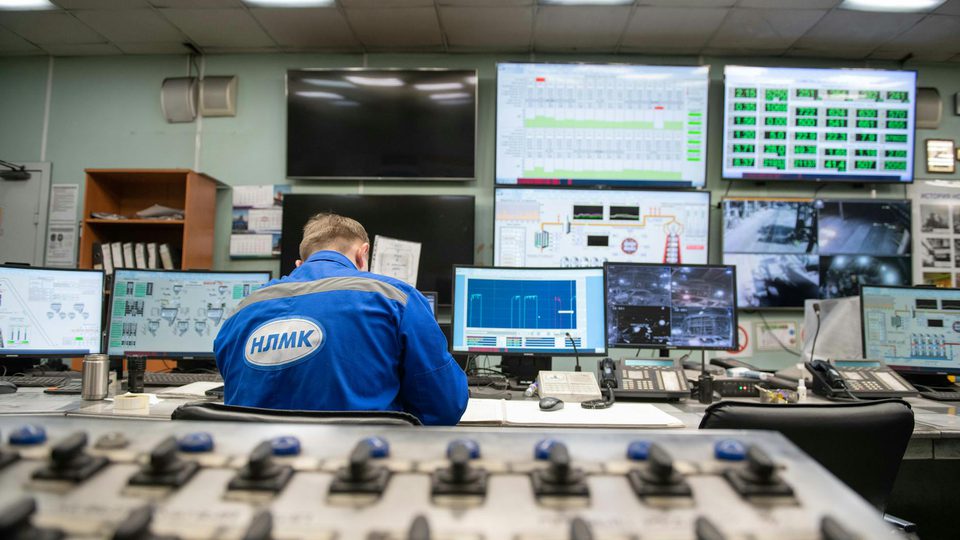
If the operator still has to compare three separate windows manually, the architecture is connected but not integrated.
Define Fusion Ownership and Latency Budgets
Good integration design also specifies where correlation happens and how quickly it must happen. In some systems, the command platform is the main fusion point. In others, one sensor subsystem may pre-correlate observations before sending a track upstream. Either approach can work, but the ownership needs to be explicit.
Latency matters for the same reason. A radar detection that cues EO too slowly may still be technically valid and operationally useless. An RF observation that arrives several seconds late may not help camera handoff or operator judgment. Integration design therefore needs a latency budget, not just a network diagram.
Decide What Counts as Sufficient Evidence
Many low-altitude systems struggle because they never define what evidence threshold justifies escalation. Does a radar-only track trigger an operator alert? Is RF context enough to promote an event? Does camera confirmation downgrade or upgrade confidence when the image is unclear?
Those rules should be written before commissioning. Otherwise, different operators will treat the same combination of sensor evidence differently, and the system will feel inconsistent even if the sensing hardware performs well.
Plan for Degraded Modes
A good integration guide also defines what happens when one modality becomes weak.
Examples:
- EO/IR may degrade in fog, glare, or poor geometry.
- RF may be less useful when the target is silent or the spectrum is congested.
- Radar may struggle in heavy clutter, masking, or badly chosen siting.
The system should therefore degrade gracefully. It should show what evidence is missing, not silently pretend the remaining sensors are telling the whole story.
Validate the Integration, Not Just the Sensors
Integration testing should include more than checking whether each device sends data. Useful validation scenarios include:
- one sensor detects first and must cue the others,
- two sensors disagree on confidence or position,
- one modality becomes unavailable mid-event,
- and several simultaneous events compete for operator attention.
Those tests reveal whether the integration is actually improving closure time and operator understanding, which is the whole point of the architecture.
Conclusion
Radar, EO/IR, and RF work best when they are integrated as a workflow: detect, associate, cue, confirm, and document. The engineering difficulty lies in time, coordinates, confidence rules, and operator design. Get those right, and the sensing layers strengthen each other. Get them wrong, and the system becomes three separate consoles.
Official Reading
- NASA: Ground to Air Testing of a Fused Optical-Radar Aircraft Detection and Tracking System - A practical reference for multi-sensor tracking and fusion logic.
- NASA: Detect-and-Avoid Surveillance Range Requirements for Electro-Optical/Infra-Red Sensors - Useful for understanding why optical performance depends on timing and geometry, not just zoom.
- FAA Remote ID - Official identity-layer context for RF-aware low-altitude systems.
- NIST Special Publication 1011-I-2.0 - A structured reference for thinking about data fusion as a layered process.