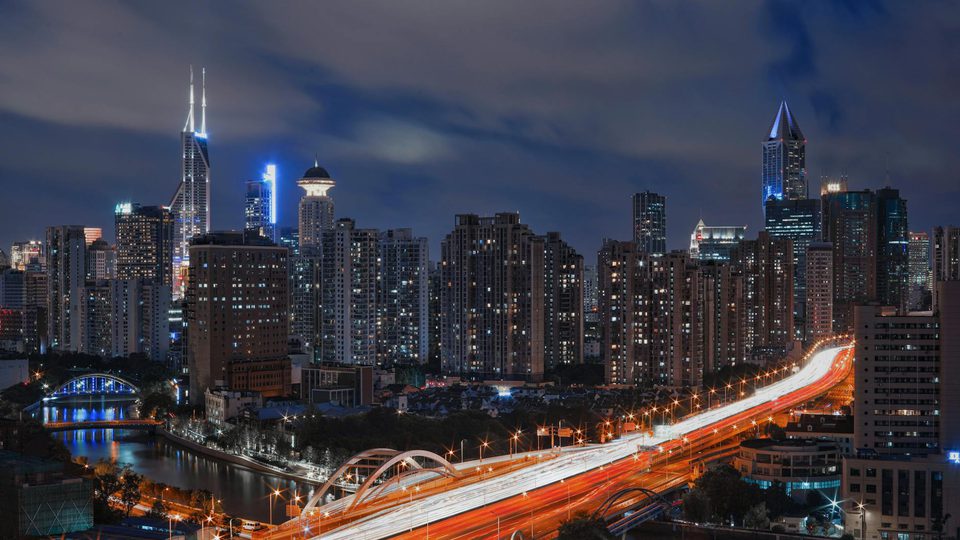
Smart city low-altitude monitoring is often framed as a future concept, but the core design problem is already here: cities need a way to understand low-altitude activity without pretending that every drone is a threat or that every urban flight can be handled by traditional air traffic methods. That makes urban monitoring a problem of managed awareness, shared data, and selective detection.
FAA and EASA work on UTM and U-space points in the same direction. These frameworks are meant to support safe, scalable operations at low altitude, especially where traffic density, automation, and beyond-visual-line-of-sight activity increase. A city-level monitoring system should therefore be designed to complement that ecosystem rather than compete with it.
What Cities Actually Need to Know
A municipal low-altitude picture usually needs to answer four different questions:
- which flights are cooperative and expected,
- which ones appear non-cooperative or anomalous,
- which areas are sensitive because of crowds, infrastructure, or emergency activity,
- and who inside the city or partner agencies needs to see the event.
That means a smart-city system cannot rely only on one data source. Cooperative traffic data is valuable, but it will not explain every object. Non-cooperative sensing is useful, but it should not be asked to recreate every element of airspace management by itself.
A City-Level Monitoring Stack
The table below is a synthesized planning aid.
| Layer | Main role in an urban environment | Common mistake |
|---|---|---|
| Cooperative traffic services | Flight planning, authorization context, and recognized participants | Assuming cooperative data covers all relevant activity |
| Non-cooperative sensing | Detects objects or emissions that are not in the planned data picture | Over-deploying sensors without clear municipal use cases |
| Visual confirmation | Helps interpret events in dense urban geometry | Expecting cameras to search large urban volumes without cueing |
| Command workflow | Shares incidents across public safety, transport, and city operations | Building separate consoles for each department |
The FAA’s UTM overview emphasizes distributed, automated information exchange. EASA’s U-space overview makes a similar point for European implementation. Those are useful reminders that urban monitoring is not simply a surveillance program. It is an information-management problem with safety and governance implications.
Cities Should Avoid Two Extreme Designs
The first bad design is to assume that cooperative services alone are enough. That fails when a flight is unauthorized, unreported, misconfigured, or simply outside the cooperative ecosystem.
The second bad design is to assume that cities need continuous tactical sensing across every block. That usually creates more noise than value unless the use cases are well defined, such as around emergency scenes, sensitive civic zones, transport hubs, or temporary high-density events.
The Real Value Is Shared Context
A city gains the most value when it can connect low-altitude activity with municipal context: emergency response, temporary restrictions, public gatherings, infrastructure maintenance, and transport operations. That shared context is what turns low-altitude monitoring into an operational tool instead of an isolated security feed.
Governance Matters More Than Sensor Density
Urban monitoring often fails when the city buys sensing tools before deciding who is supposed to use the resulting picture. A municipal program usually involves public safety, transport, emergency management, event operations, and sometimes aviation or infrastructure stakeholders. If ownership is vague, the city can end up with a technically capable platform that no one is fully responsible for operating or updating.
This is why governance should define:
- which department owns the common operating picture,
- which events are informational versus actionable,
- how temporary restrictions or emergency zones are reflected,
- and what outside agencies should see during multi-agency incidents.
Dense Urban Geometry Changes Validation
Cities also need more realistic testing than open-field sites. High-rise structures, reflective surfaces, dense RF activity, and crowded street-level operations all complicate low-altitude awareness. A city that validates only under clear and simple conditions can easily overestimate what the system will do during a real emergency or public event.
Good validation should include:
- dense downtown sectors,
- mixed cooperative and non-cooperative activity,
- temporary restrictions near public events,
- and workflows where several departments must interpret the same event differently.
Common Municipal Planning Mistakes
Several mistakes appear repeatedly in smart-city monitoring programs:
- assuming cooperative traffic services remove the need for any local sensing,
- trying to create continuous tactical surveillance across every neighborhood,
- building different consoles for different municipal stakeholders,
- and collecting more low-altitude data than the city can realistically triage.
The better design is selective, role-aware, and tied to concrete municipal use cases.
Data Sharing Boundaries Need To Be Explicit
Cities also need to decide what information is shared broadly and what remains role-limited. Public safety, transport, and aviation-related partners may all need part of the picture, but not every user needs the same level of operational detail. Explicit sharing rules make the system more governable and reduce confusion during multi-agency incidents.
A Good Municipal Outcome
The best outcome is not that the city sees everything. It is that the city can distinguish expected activity, ambiguous activity, and genuinely abnormal activity quickly enough to involve the right department without overreacting.
Conclusion
Smart city low-altitude monitoring should be designed as a shared-awareness system, not as citywide blanket surveillance. The most useful architecture combines cooperative data, selective non-cooperative sensing, and a governance model that makes municipal decisions faster and more consistent. That is how cities gain practical value without creating unnecessary noise.