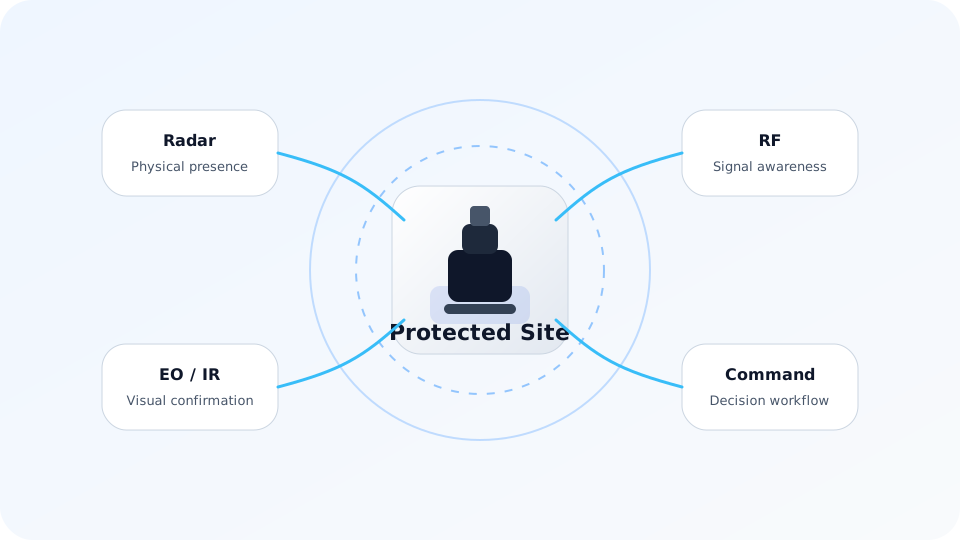
What is counter-UAS? Counter-UAS means the set of measures used to detect, assess, and respond to unmanned aircraft activity that may be unsafe, unauthorized, or threatening. The term is often shortened to C-UAS, and many people also say counter-drone.
The simplest way to understand it is this: counter-UAS is not one sensor and it is not one jammer. It is a workflow for dealing with drones when they create a security, safety, or operational problem. In some environments that workflow ends with reporting and monitoring. In others it may include protective action, mitigation, or a response by an authorized authority.
That distinction matters because beginners often confuse drone detection with counter-UAS. Detection is important, but it is only the first step. A camera, a radar, or an RF detector may tell you that something is happening. Counter-UAS begins when an organization has to decide what the event means and what to do next.
What Counter-UAS Actually Means
At a high level, counter-UAS exists because drones can create several different kinds of problems at the same time.
- They can create a direct safety risk near airports, crowds, or emergency scenes.
- They can create a security problem near restricted facilities, borders, or critical infrastructure.
- They can create an operational problem by interrupting normal work, slowing traffic, or forcing teams to investigate.
- They can create an uncertainty problem, where the organization does not know whether the object is friendly, harmless, careless, or hostile.
That last point is often underestimated. Many sites are not only trying to stop a drone. They are trying to reduce uncertainty fast enough to make the right operational decision. A counter-UAS system is therefore not only about physical detection. It is also about turning an ambiguous low-altitude event into a decision that people can trust.
In practice, the phrase counter-UAS can cover several layers:
- awareness of what is in the air,
- recognition of what may matter,
- decision support for the operator,
- and some form of response, protection, or handoff.
This is why official public guidance from agencies such as DHS, CISA, the FAA, and DoD tends to treat the topic as a multi-step mission rather than as one product category.
Drone Detection Is Only One Part of Counter-UAS
Many people first encounter the topic through the phrase drone detection. That is understandable, because detection is the most visible piece of the stack. But a detected drone does not automatically tell you enough to act.
An operator still needs to answer practical questions:
- Is the detection real or false?
- Is the drone inside a sensitive zone or only nearby?
- Is it cooperative, authorized, or expected?
- Is it transmitting anything useful, such as Remote ID or another RF signal?
- Does the event require monitoring, reporting, local protection, or outside intervention?
Those questions explain why counter-UAS is broader than simple sensing. Good systems help close the gap between seeing a possible drone and understanding what the site should do.
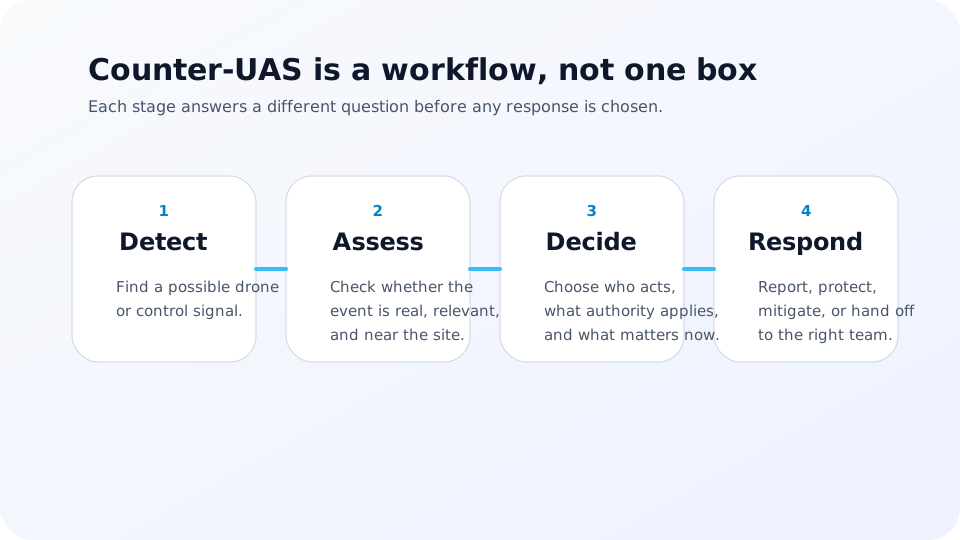
Figure: Synthesized workflow diagram showing the basic counter-UAS chain from detection to response. It is an educational explainer, not a site-specific playbook.
The best beginner mental model is a four-step loop:
- Detect: find a possible drone, signal, or suspicious low-altitude event.
- Assess: determine whether the event is real, relevant, and important.
- Decide: choose what authority, workflow, and response path applies.
- Respond: take the allowed operational action, or hand the event to the correct team.
Some organizations are strong at the first step but weak at the next three. That is usually why a page or vendor claim can sound impressive at first and disappointing later. Technology can spot an object, but counter-UAS quality is judged by what happens after that first alert.
The Main Sensor Layers in a Counter-UAS System
Because no single sensor answers every question well, most serious counter-UAS designs are layered.
The most common sensing layers are:
- Radar, which is useful for finding physical objects and measuring movement.
- RF detection, which is useful for finding drone control links, telemetry, or broadcast identification signals when the target is transmitting.
- EO / IR imaging, which is useful for visual confirmation and evidence.
- Sometimes acoustic sensing, which may help in specific short-range situations but is usually more environment-sensitive.
Each layer has strengths and weaknesses. A radar may detect a small airborne object before anyone can see it clearly, but it may not tell the operator exactly what the object is. RF detection may reveal that a drone or operator is transmitting, but it may contribute little if the aircraft is silent or autonomous. EO / IR imaging may give human-readable confirmation, but it depends on line of sight, weather, and where the camera is pointed.
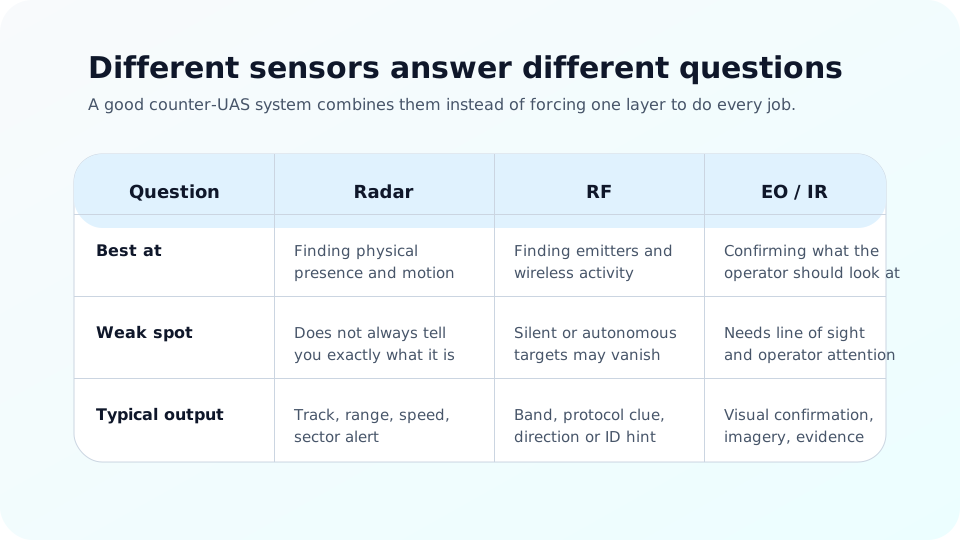
Figure: Synthesized comparison graphic showing why radar, RF, and EO / IR usually work best together rather than alone.
This is one of the most important ideas for beginners. Counter-UAS systems are layered because the problem itself is layered. The site needs to know whether something is physically present, whether it is transmitting, whether it can be visually confirmed, and whether the event matters enough to trigger a response.
That is also why counter-UAS should not be treated as a synonym for anti-drone jammer. A jammer is one possible response tool in some environments. It is not the whole discipline.
What Happens After a Drone Is Detected
Once a possible drone event is detected, the hard part begins. The system and the operator have to move from raw signal or track data toward a trustworthy decision.
This usually means combining several kinds of context:
- location of the event,
- track history or movement pattern,
- protected-zone boundaries,
- operating schedule,
- cooperative information such as Remote ID when available,
- and the site’s own response rules.
For example, a track outside a protected area may only need monitoring. The same track moving toward a runway approach, a prison, or a power facility may become much more important. An RF hit by itself may be weak evidence. The same RF event combined with a radar track and an optical cue may be enough to support a more confident decision.
This stage is where many counter-UAS projects either become useful or become noisy. If every alert looks the same, operators burn time sorting low-value events. If the system is well structured, it helps operators distinguish normal, uncertain, and high-priority cases faster.
That is why a common operating picture matters. The operator should not have to reconcile three separate consoles mentally every time an event appears. The better the fusion and workflow design, the less the system feels like a collection of gadgets and the more it feels like one usable defensive process.
Why Response Authority Matters
One of the biggest beginner mistakes is assuming that counter-UAS automatically means take down the drone. In reality, response authority is one of the most sensitive parts of the topic.
Different organizations have different legal powers, safety responsibilities, and operating constraints. In some places the correct action may be to observe, report, or protect people and assets while another authority takes charge. In other places, specific public authorities may have narrow powers to mitigate a credible threat. The technology question and the authority question are related, but they are not the same thing.
This matters for two reasons.
First, it changes system design. If the site’s role is mainly early warning and escalation, then the best investment may be strong detection, confirmation, logging, and handoff workflow rather than an aggressive mitigation tool. Second, it changes how results are judged. A good counter-UAS system is not always the one that acts the most dramatically. It is the one that supports the right decision within the real authority and safety framework of the user.
The FAA’s Remote ID materials are useful here because they show how broadcast identification can help safety and accountability, but they do not turn every site into a mitigation authority. DHS, CISA, and DoD materials also make clear that response policy depends on mission, risk, and who is legally allowed to act.
Where Counter-UAS Works Well, and Where It Struggles
Counter-UAS systems are usually most effective when the protected mission is clear.
Examples include:
- airports and approach corridors,
- correctional facilities,
- public events,
- military and government sites,
- critical infrastructure,
- and selected border or coastal positions.
In those places, operators usually know what counts as normal airspace behavior, which zones matter most, and which team should receive the alert. That makes the detect-assess-decide-respond loop easier to design.
Counter-UAS becomes harder when the environment is crowded, legally complex, or full of ambiguity. Dense cities, mixed public-private spaces, heavy RF noise, complicated terrain, and high volumes of legitimate drone traffic all make simple answers less reliable. Silent drones, autonomous missions, and bad line-of-sight conditions can also reduce the value of individual sensing layers.
This does not mean counter-UAS fails in those environments. It means the system has to be more disciplined. The site may need stronger rules, better sensor placement, better operator training, or a narrower definition of what the system is actually supposed to do.
Common Misunderstandings About Counter-UAS
Several beginner misunderstandings appear again and again.
“Counter-UAS is just drone detection”
Not quite. Detection is the beginning of the problem, not the full solution. A serious program also needs assessment, decision logic, and an operational response path.
“One sensor should do everything”
Usually not. Radar, RF, and EO / IR answer different questions. A layered system exists because the target, the environment, and the user decision are all more complicated than one measurement.
“If I can detect it, I can stop it”
Not automatically. Technology capability and legal authority are different issues. Even when action is possible, the safest or most appropriate action may vary by site and event.
“Counter-UAS is only for the military”
No. Many civil environments need some form of counter-UAS awareness, especially when unauthorized or unsafe drone activity can interrupt operations or create a security concern.
“Remote ID solves counter-UAS by itself”
No. Remote ID is valuable, but it is only one layer. It helps when the aircraft is compliant and broadcasting. It does not replace physical sensing, visual confirmation, or site workflow.
A Good Beginner Takeaway
If you remember only one idea, remember this: counter-UAS is a decision workflow built around drones, not a single anti-drone device.
The system starts by discovering that something may be happening in the low-altitude environment. It becomes useful when it helps people understand whether the event matters, what authority applies, and what action makes sense. That is why the strongest counter-UAS designs are layered, operationally disciplined, and clear about their limits.