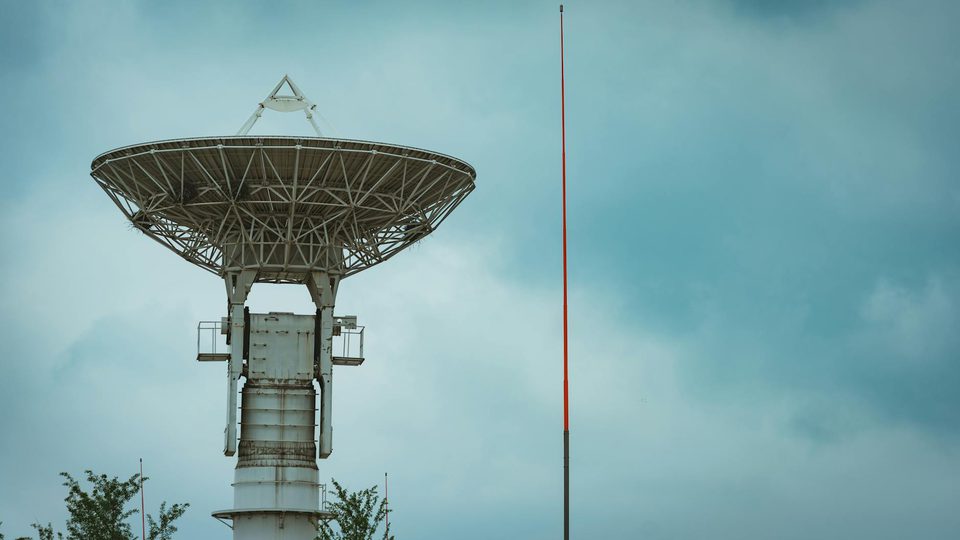
Radar is often described as if it were mysterious or only military. Its core logic is much simpler: send electromagnetic energy into a region, receive the reflected echo, and process the return into information about distance, direction, speed, or movement. What makes radar technically rich is not the basic loop itself. It is the many ways engineers have improved beam control, timing, measurement, and coverage behavior around that loop.
For beginners, the most important distinction is not between one brand and another. It is between the major ways radar systems steer attention and solve geometry.
The Core Radar Loop
At a high level, radar performs four steps:
- generate an RF signal,
- transmit it toward a region of interest,
- receive the echo,
- process the return into useful measurements.
From there, much of radar history can be read as a story of better beam control, better timing, better processing, and more flexible architecture.
Why Beam Steering Matters So Much
A radar is only useful where it is looking and how often it comes back to look again. That is why beam steering is such a central design question. A radar can have strong transmit power and good processing, but if the beam-control method does not match the mission, the system can still be wrong for the site.
Beam steering affects:
- revisit rate,
- sector prioritization,
- maintenance burden,
- and how easily the radar can support both search and tracking tasks.
This is what separates mechanical scan, phased array, and more advanced electronically scanned architectures.
Mechanical Scan: The Classic Approach
Mechanical scanning steers the beam by physically moving the antenna. That movement may be rotational or sector-based, but the core idea is the same: the antenna points in different directions by turning.
Mechanical scan remains useful because it is:
- conceptually simple,
- field-proven,
- and often cost-effective for broad-area watch.
It is still common in applications where periodic revisit is acceptable and where the mission does not demand instantaneous sector redirection.
Its main trade-offs are also clear:
- slower revisit than electronic steering,
- dependence on moving parts,
- and less flexibility when the site suddenly needs to favor one sector over another.
Mechanical scan is therefore not obsolete. It is simply less agile.
Phased Array: Steering Without Turning the Antenna
Phased arrays changed radar architecture by proving that beam steering does not require the entire antenna to move. By controlling the relative phase across many antenna elements, the radar can redirect the beam electronically.
That creates several operational benefits:
- faster scanning,
- selective beam placement,
- reduced dependence on large mechanical structures,
- and more flexible control of where the radar looks next.
Phased array does not automatically mean every array is active or every system is equally advanced. It means electronic beam steering has replaced or reduced the need for mechanical steering.
AESA: Active Control Across the Array
Active electronically scanned array, or AESA, goes further by distributing transmit/receive functionality across the array surface. Instead of relying on a more centralized feed concept, the system uses many active paths and can support more agile beam control and more resilient behavior.
In practical terms, AESA is attractive because it can support:
- rapid electronic steering,
- stronger multifunction behavior,
- graceful degradation when some elements fail,
- and architectures with lower dependence on large moving assemblies.
The user-facing benefits are usually seen as:
- faster revisit,
- better sector management,
- improved availability,
- and cleaner integration into more modern digital and command workflows.
Mechanical Scan vs Phased Array vs AESA
| Architecture | Steering method | Main strength | Main limitation | Typical planning fit |
|---|---|---|---|---|
| Mechanical scan | Physical motion | Simplicity and cost discipline | Slower revisit and moving parts | Broad-area watch where periodic scan is acceptable |
| Phased array | Electronic steering by phase control | Faster beam placement and more agility | Higher complexity than mechanical systems | Missions that need better scan control |
| AESA | Active electronic control across many T/R paths | Flexible multifunction behavior and resilience | Greater system and production complexity | High-availability or high-agility architectures |
This table is a planning summary, not a product ranking.
Where Over-the-Horizon Radar Fits
Over-the-horizon radar, or OTH radar, is often misunderstood as a stronger version of normal radar. That is not the right comparison. OTH radar solves a different geometry problem: how to observe far beyond the normal line of sight imposed by the Earth’s curvature.
It does this by using different propagation logic, often involving HF energy and ionospheric behavior, to support strategic-scale warning over very large distances.
That makes OTH radar important at national or theater scale, but it also means it belongs to a different architectural class from the radars used for airport, coastal, campus, or industrial site security.
For civil-security planners, the useful lesson is not to compare OTH radar directly against site-surveillance radar. The useful lesson is to understand how mission scale changes architecture.
How End Users Should Think About These Choices
If you are planning a real deployment, the better questions are usually:
- What revisit behavior does the site need?
- How much mechanical maintenance is acceptable?
- How quickly must the radar reallocate attention to one sector?
- How important is high availability?
- How will the radar hand off to optics and command software?
Those questions lead to better system selection than simply asking which radar type sounds more advanced.
Why This Matters in Modern Security Systems
For security and low-altitude monitoring, the architecture question is not only about how the beam is steered. It is about what the beam-steering method allows the rest of the system to do. Faster revisit and cleaner digital control can improve cueing, operator confidence, and multi-sensor fusion, while a simpler mechanical system may still be rational when the mission is more predictable and cost discipline matters more.
That is why this topic should be read together with Comparison of Different Radar Scanning Architectures, From GaAs to GaN: What Makes AESA Radar Industrially Ready?, and the Cyrentis CR Series radar products. Radar architecture affects workflow, not just physics.
Conclusion
The core echo principle of radar has not changed, but beam control and system architecture have changed the field dramatically. Mechanical scan remains useful for many stable surveillance roles. Phased arrays introduced faster electronic steering. AESA extended that logic into more agile and resilient systems. Over-the-horizon radar belongs to a different scale of problem entirely. The right choice depends on geometry, revisit needs, maintenance tolerance, and what the wider system must do with the information.
Official Reading
- NOAA: Radar - Useful official baseline on the core radar principle and why radar remains valuable in difficult weather and visibility conditions.
- NOAA Weather Program Office: Phased Array Radar - Useful official context for how phased-array and electronically scanned architectures change operational behavior.
- MIT Lincoln Laboratory: The Development of Phased-Array Radar Technology - Useful foundational background on the shift from conventional beam steering to phased-array approaches.