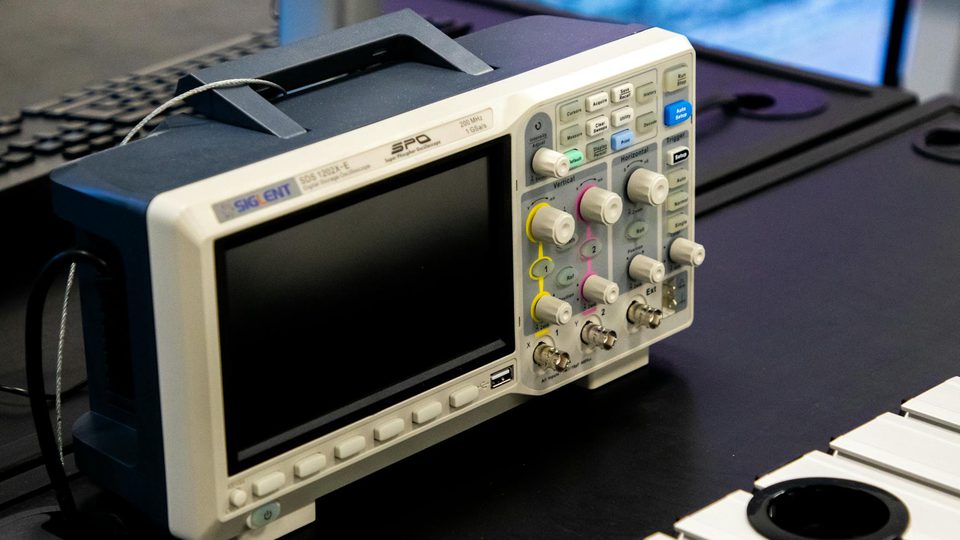
FMCW and pulse radar are often introduced as two different ways to build radar. That is correct, but it is not enough for system planning. The important question is how the transmit method changes the rest of the sensing chain, from hardware complexity and power profile to range behavior and mission fit.
The better comparison is therefore not only how they work, but what each architecture makes easier or harder.
FMCW Radar in Practical Terms
An FMCW radar transmits continuously while varying frequency over time, usually in chirps. By comparing the transmitted and received signals, the radar can estimate range and Doppler information together.
That architecture is often attractive when the project values:
- compact hardware,
- continuous sensing,
- relatively low power,
- and strong short- to medium-range range-plus-velocity performance.
This is one reason FMCW is so common in automotive, industrial, and compact surveillance sensing.
Pulse Radar in Practical Terms
Pulse radar transmits a burst, then listens for the echo before the next burst. The separation between transmit and receive windows makes it conceptually simple and operationally powerful for many classic surveillance missions.
Pulse radar remains important when the project needs:
- longer range,
- high peak transmit power,
- flexible pulse design,
- or architectures that scale into broad-area surveillance roles.

Figure: Synthesized explanatory diagram comparing the basic operating rhythm of pulse radar and FMCW radar. It is an educational illustration, not a waveform capture from one device.
Why Waveform Choice Changes the Rest of the System
FMCW versus pulse is not a narrow waveform debate. The choice affects front-end design, isolation challenges, power behavior, processing load, minimum-range behavior, and how comfortably the radar fits into the surrounding platform.
That is why teams should not evaluate waveform family after they have already fixed enclosure size, power envelope, and deployment concept. By then, part of the real decision has already been made.
Architectural Advantages and Limitations
| Design question | FMCW tendency | Pulse radar tendency |
|---|---|---|
| Hardware size and integration | Often more compact | Often larger and higher power |
| Range and velocity estimation | Strong together in one sensing chain | Strong, but design depends on pulse strategy |
| Longer-range scaling | More limited in many practical implementations | Often better suited |
| Need for transmit/receive separation handling | Different leakage and isolation issues | Clear transmit-listen timing problem |
| Common mission fit | Short- to medium-range sensing | Medium- to long-range surveillance |
How the Measurement Logic Differs
In pulse radar, range is tied directly to time of flight: transmit, wait, and measure how long the echo takes to return. Velocity is then estimated through Doppler processing across pulses or coherent pulse sequences.
In FMCW radar, the receiver compares the echo with the frequency the radar is transmitting at that moment. The resulting beat frequency helps estimate range, while Doppler appears as a motion-related shift that must be separated from the range information through signal processing.
The two architectures solve the same sensing problem through different measurement logic, which is part of why their hardware and processing trade-offs differ so much.
FMCW Advantages
FMCW is attractive because it can measure range and motion efficiently in a compact architecture. It also fits well with highly integrated radar sensors and dense digital processing chains.
In practical project terms, FMCW is often valuable when:
- the radar has to live in a constrained size or power envelope,
- the mission focuses on local or mid-range sensing,
- and the system benefits from frequent updates and compact integration.
FMCW Limitations
FMCW is not free of engineering cost. Designers still have to manage signal leakage, linear chirp behavior, dynamic range, and processing burden. In real systems, those constraints shape the practical ceiling of what the architecture can do.
That is why FMCW is powerful, but not universal.
FMCW also tends to shine when the project values compact packaging and dense update cadence more than classic long-range scaling.
Pulse Radar Advantages
Pulse radar remains compelling for broader-area and longer-range roles because the architecture supports strong peak-power behavior and a long history of surveillance-oriented design. For many air-surveillance and wide-area watch missions, those characteristics still matter.
It is also easier to explain operationally: transmit, wait, receive, repeat.
Pulse Radar Limitations
Pulse radar carries its own burdens:
- transmit and receive timing has to be managed carefully,
- minimum-range behavior can be constrained by the transmit-listen cycle,
- and the total system may become larger or more power-intensive.
So while pulse radar scales well for many long-range jobs, it is not automatically the better answer for compact security systems.
Why the Better Question Is Mission Fit
If the radar is part of a compact node, a mobile platform, or a short- to medium-range sensing layer with tight integration constraints, FMCW often becomes attractive. If the mission emphasizes longer reach, higher peak power, or broader surveillance roles, pulse radar often becomes easier to justify.
Neither answer is intrinsically superior. Each one makes a different set of engineering constraints easier to live with.
The Better Selection Question
Choose FMCW first when the mission emphasizes compact integration, lower power, dense updates, and short- to medium-range awareness. Choose pulse first when the mission emphasizes wider-area surveillance and performance that benefits from higher peak-power architectures.
If the project team argues about FMCW versus pulse without first agreeing on target range class, size limits, power budget, and track expectations, the discussion usually becomes unproductive quickly.
A Useful Selection Sequence
Teams should usually decide in this order:
- required range class,
- size and power envelope,
- minimum-range tolerance,
- update-rate expectations,
- and how the radar has to support the larger surveillance workflow.
That sequence keeps waveform choice tied to mission reality instead of to terminology alone.
It also prevents teams from selecting a waveform family after other design constraints have already made the outcome obvious.
That is usually the point where waveform choice becomes a system-design decision rather than a classroom comparison.
It is also where many poor procurement assumptions get corrected.
Common Misunderstandings
“Continuous wave means no range measurement”
Not necessarily. Plain continuous-wave radar is often associated with motion measurement, but FMCW changes frequency over time specifically to support range estimation as well.
“Pulse radar is old, so FMCW must replace it”
No. Pulse radar remains extremely important because many radar missions still benefit from pulse architectures.
“FMCW is only for cars”
Automotive radar made FMCW more familiar to the public, but the method is useful in many sensing domains, from industrial sensing to security platforms.
“Pulse radar is always better for range”
Not automatically. Range depends on the full design, including antenna, power, waveform, processing, target assumptions, and clutter environment. Pulse architectures are often associated with longer-range missions, but the mission requirement still decides whether that advantage matters.
Conclusion
FMCW radar often wins on integration efficiency, compactness, and practical short- to medium-range sensing. Pulse radar still matters for many longer-range and higher-power surveillance roles. The right choice is not about which architecture sounds newer. It is about which limitations the mission can tolerate.
Further Reading
- Infineon: RADAR basics (FMCW) - Useful official overview of FMCW radar architecture, chirps, and range-Doppler processing concepts.
- MIT Lincoln Laboratory: Introduction to Radar Systems - Good broader context for how pulse-style radar fits into classic surveillance architectures.
- NOAA National Severe Storms Laboratory: Radar FAQ - Useful beginner-level official explanation of pulse radar timing and range measurement concepts.
- TI: Intro to mmWave Sensing - FMCW Radars - A practical primary-source explanation of FMCW radar behavior and chirp-based measurement.
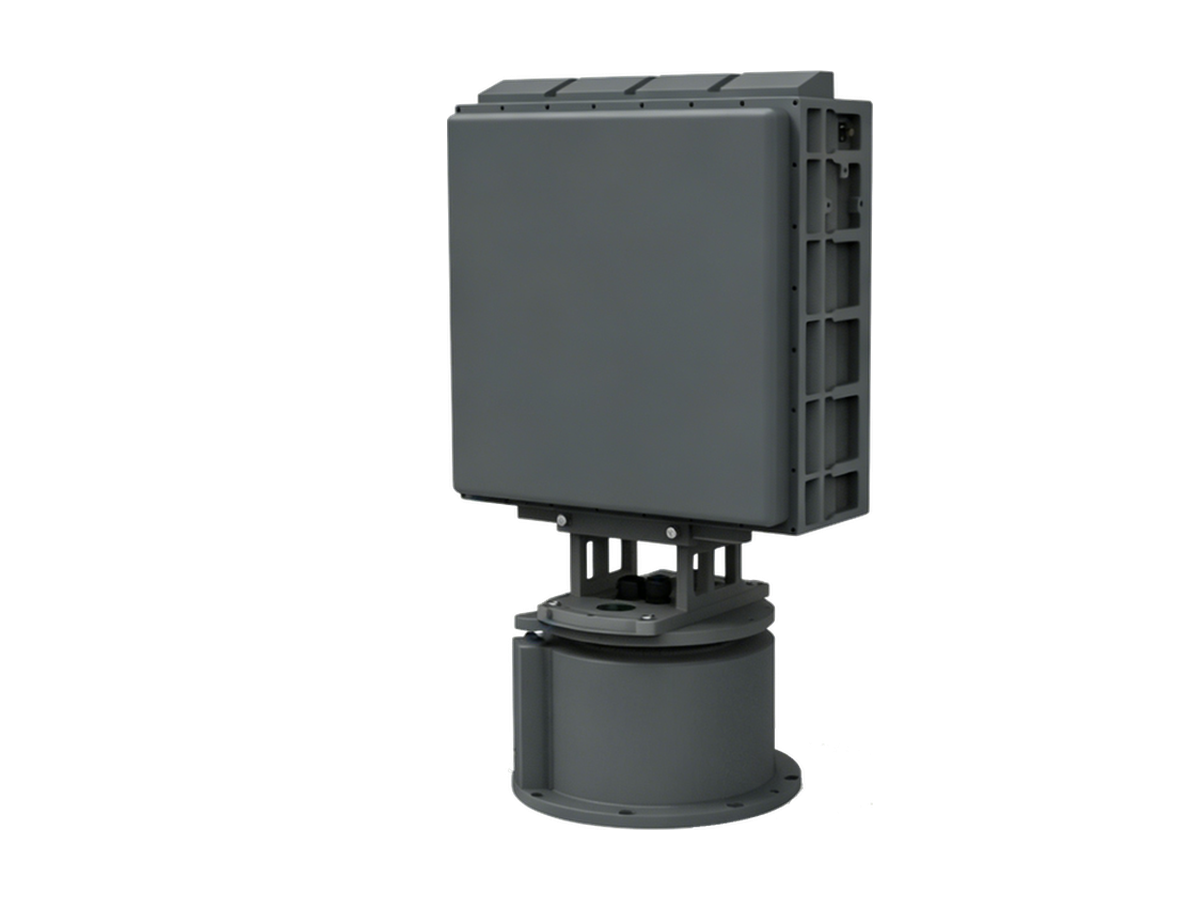
Need Counter-Drone Radar for Your Site?
CR series low-altitude surveillance radars detect RCS 0.01 m² drones at 3–10 km and classify targets by micro-Doppler — every track outputs with target class and confidence.