
According to the basic working principle of radar, any system that detects and locates targets by transmitting electromagnetic energy and utilizing the reflected echoes falls within the scope of radar, regardless of its transmission frequency. Common radar operating frequencies typically range from 220 MHz to 35,000 MHz, but in practice, many radar systems may operate outside this range. For example, sky-wave over-the-horizon (OTH) radar can operate at frequencies as low as 4 MHz or 5 MHz, while ground-wave OTH radar can operate at frequencies as low as 2 MHz. At the higher end of the spectrum, millimeter-wave radar can reach 94 GHz, and lidar uses even higher optical frequencies. Radars operating at different frequencies exhibit significant differences in engineering design and implementation.
Although radar operating frequencies cover an extremely wide range of the electromagnetic spectrum, in practical applications, the vast majority of radar systems still primarily operate within the 200 MHz to 10 GHz frequency band.
Radar Frequency Classification
Low-Frequency Radar Band (2 MHz–300 MHz)
- Operating Frequency: 2 MHz–300 MHz (covering the HF and VHF bands)
- Application Scenarios: Over-the-horizon radar, ocean monitoring, meteorological detection, etc.
Ultra-High Frequency (UHF) Radar
- Operating Frequency: 300 MHz–3 GHz (decimeter waves)
- Application Scenarios: Aviation surveillance, traffic management, drone detection, etc.
Super-High Frequency (SHF) Radar
- Operating Frequency: 3 GHz–30 GHz (centimeter waves)
- Application Scenarios: Weather radar, border surveillance, security systems, etc.
Extremely High Frequency (EHF) Radar
- Operating Frequency: 30 GHz–300 GHz (millimeter waves)
- Application Scenarios: Millimeter-wave imaging, autonomous driving, intelligent transportation, etc.
Principles of Radar Frequency Selection
- Application-Driven Requirements : Select an appropriate frequency range based on the specific application scenario to meet requirements such as detection accuracy, range, and environmental adaptability.
- Environmental Factors : In complex environments, consider the impact of electromagnetic interference, weather conditions, and other factors on radar performance, and choose a suitable frequency to ensure stability and reliability.
- Technical Maturity Assessment : Prioritize frequency bands with mature technology and market validation to reduce R&D risks and costs while improving system integration efficiency.
- Compliance with Regulations and Standards : Ensure the selected frequency complies with international and regional spectrum management regulations to avoid interference with other communication and navigation systems.
- Future Development Trends : Stay informed about emerging technologies and application trends, and reserve frequency resources to support future upgrades and expansion needs.
- Cost-Benefit Analysis : Comprehensively evaluate the impact of frequency selection on system costs, balancing performance and budget to ensure the economic feasibility of the project.
- Multi-Band Integration Capability : For applications requiring multifunctional integration, choose radar systems that support multi-band operation to enhance overall performance and adaptability.
Radar Frequency Application Examples
Low-Frequency Radar Band (2 MHz–300 MHz)
- Application Cases: Ocean monitoring, meteorological detection, etc.
Ultra-High Frequency (UHF) Radar
- Application Cases: Aviation surveillance, traffic management, drone detection, etc.
Super-High Frequency (SHF) Radar
- Application Cases: Weather radar, border surveillance, security systems, etc.
Extremely High Frequency (EHF) Radar
- Application Cases: Millimeter-wave imaging, autonomous driving, intelligent transportation, etc.
Further Reading
- NOAA JetStream: Doppler Radar — fundamentals of radar technology.
- NASA Science: Electromagnetic Spectrum — spectrum bands and remote sensing.
- C-Band vs X-Band vs Ku-Band Radar
- Choosing Radar Frequency Bands: Pros, Cons, and Application Scenarios
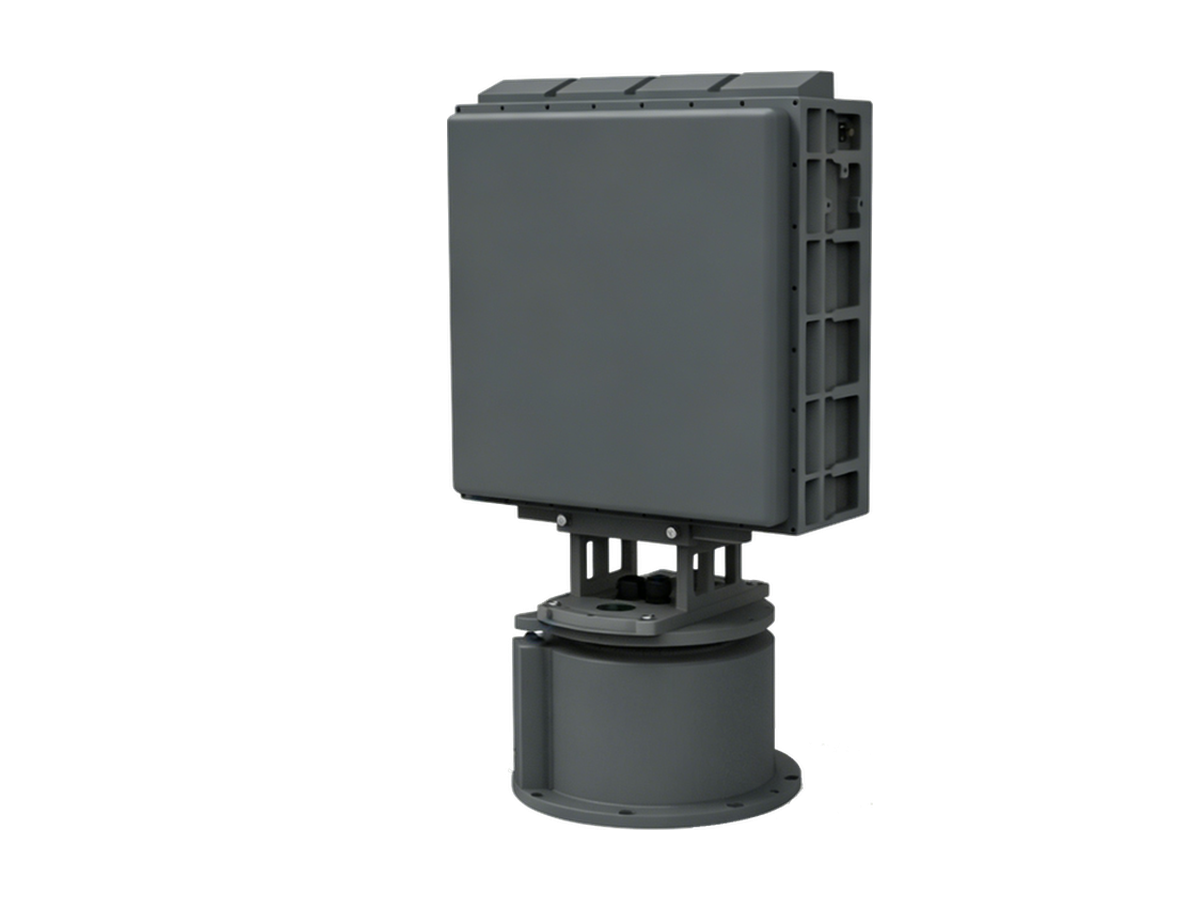
Need Counter-Drone Radar for Your Site?
CR series low-altitude surveillance radars detect RCS 0.01 m² drones at 3–10 km and classify targets by micro-Doppler — every track outputs with target class and confidence.