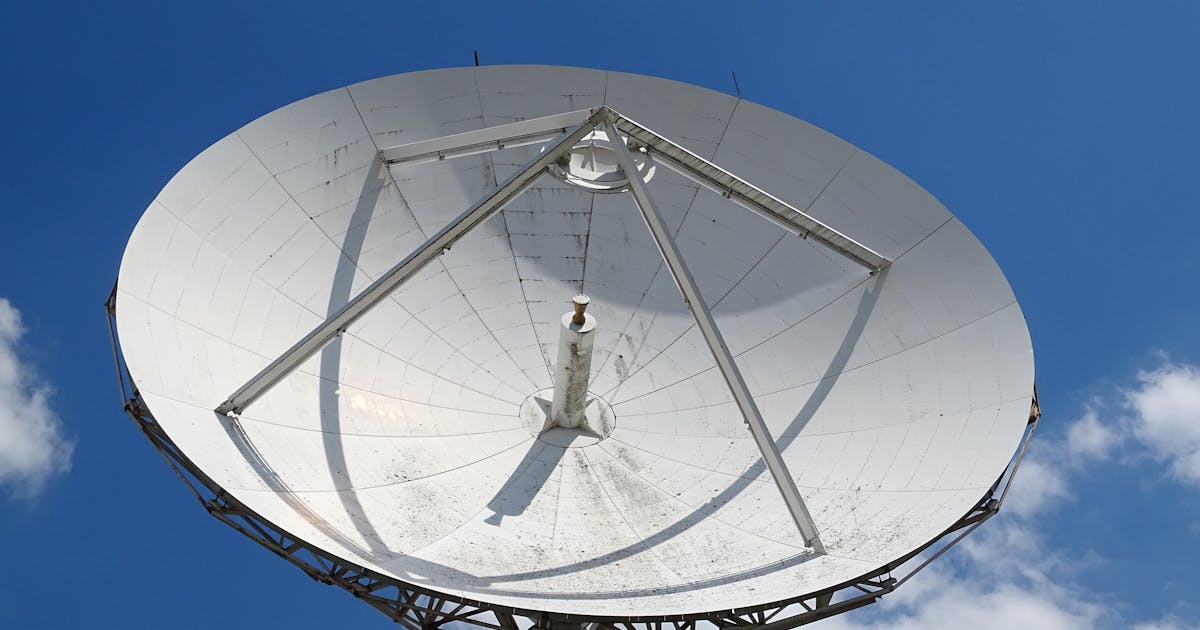
Face-plus-turntable radar is a hybrid architecture. The radar face can scan electronically within its own field of view, while the face or radar head is mounted on a mechanical turntable to extend overall coverage. It sits between a fixed multi-face radar and a traditional mechanically rotating radar.
The architecture is neither automatically good nor bad. It is useful when the project needs broad low-altitude awareness but cannot support the cost, power, installation, or calibration complexity of multiple fixed faces. If one direction needs continuous high-update staring, however, a fixed face or multi-face design may be better.
What Problem It Solves
A fixed single face is strong in one sector, but full coverage requires several faces. A multi-face system can provide fast updates in all directions, but it costs more and is more complex to install. A traditional rotating radar covers widely, but update rate depends on rotation and revisit time.
Face-plus-turntable radar tries to balance these needs. The face handles electronic scanning and target processing. The turntable moves that face through different directions to increase total coverage. For medium-budget sites that need broad surveillance but not extreme update rates in every direction, it can be practical.
Good for Open or Semi-Open Sites
This architecture works best where the surroundings are relatively open and line of sight is not heavily blocked. Examples include campus perimeters, temporary event sites, open port areas, energy facilities, border segments, and field deployments.
In these environments, one face can cover multiple directions by rotating. As long as revisit time supports the target speed and alert workflow, the system can provide useful all-around awareness.
Dense urban sites are harder. If buildings block many sectors, one turntable location may not solve the blind spots. The project may need multiple radar locations, fixed-face supplements, or other sensors.
Good for Moderate Risk and Response Requirements
Face-plus-turntable is not always the best architecture for the highest-security sites. While the turntable looks one way, other directions wait for the next scan. For very fast targets, very short response time, or all-direction high-update tracking, that can be a limitation.
Many projects, however, do not need maximum update rate in every direction. They need timely detection, track formation, zone alerts, and EO/IR confirmation. In those cases, a turntable design can deliver wide coverage with fewer hardware faces.
Always ask for the actual update rate by sector. “360-degree coverage” does not mean every direction is updated fast enough.
Useful for Temporary or Mobile Deployment
For event security, emergency deployment, temporary protection, or mobile platforms, a face-plus-turntable radar can be easier to transport and set up than a fixed multi-face system. It can provide broad awareness from one package.
Mobile use still requires care. Leveling, north alignment, coordinate calibration, power, network, wind resistance, and quick commissioning all matter. A radar that rotates is not enough if the tracks are not accurate for the command platform and EO/IR cameras.
Key Limitations
The main limitations include:
- mechanical moving parts require life-cycle planning, maintenance, and environmental protection;
- revisit time depends on rotation speed and scan strategy;
- turntable failure can affect the whole coverage pattern;
- continuous staring at a priority sector is weaker than with a fixed face;
- wind, vibration, dust, salt, ice, and rain can increase engineering requirements;
- EO/IR cueing can be affected by target update intervals.
These limits do not disqualify the architecture. They just need to be tested and written into the project assumptions.
What Buyers Should Ask
When evaluating face-plus-turntable radar, ask:
- What is the electronic scan field of view of the face?
- What is the rotation period and revisit time by sector?
- Can it maintain tracks on small, slow, or hovering drones?
- What is the turntable lifetime, maintenance interval, and failure mode?
- How is the system protected against wind, rain, dust, salt, or ice?
- What degraded mode exists if the turntable stops?
- Can the scan strategy prioritize important sectors?
- Has EO/IR cueing been tested at a real site?
- Are fixed faces or other sensors needed to fill blind spots?
These questions are more useful than relying on the words “phased array” and “360 degrees.”
Conclusion
Face-plus-turntable radar fits low-altitude surveillance projects that need broad coverage, controlled hardware count, and acceptable revisit time. It combines electronic scanning flexibility with mechanical wide-area pointing.
It is not the default answer for every counter-UAS site. High-update priority sectors, full-direction continuous tracking, or very high-security sites may require fixed faces, multi-face arrays, or a mixed sensor layout. The right choice depends on site geometry, threat paths, response time, and maintenance conditions.