
I. Overview
In the field of perimeter security, no single solution fits all scenarios. Different types of sensors and security measures have their own emphases, and selection must be based on the actual environment and security requirements. Global security experts generally agree that protecting high-value private assets and critical infrastructure requires a strategy of multi-sensor fusion and multi-level system integration to build a truly reliable perimeter protection system.
Developing an efficient multi-level security plan requires a deep understanding of potential threats and applicable technologies. This article will comprehensively compare fiber fence security systems and new compact security radars from multiple dimensions, including technical principles, deployment costs, system integration, and practical effectiveness, to help users make optimal decisions based on actual needs and budgets.
II. Analysis of Fiber Fence Security Systems
Fiber-based fence security systems are highly sensitive perimeter intrusion detection solutions that use optical fiber sensors embedded in fence structures to detect vibrations and deformations, enabling real-time alerts for intrusions such as climbing, cutting, or impact. This system is particularly suitable for high-security locations such as prisons, airports, and power plants.
Working Principle:
- Optical fibers are deployed in segments to achieve precise intrusion location detection.
- Sensors capture vibration signals in real time and generate alerts.
- Alarm information is uploaded to a network manager and integrated into VMS, SMS, or PSIM platforms.
III. Introduction to Compact Security Radar Technology
New compact security radars use advanced radio wave detection technology to detect and track moving targets in monitored areas in real time, providing early warnings to security personnel and giving them more time to respond.
Core Advantages:
- All-Weather Operation : Unaffected by adverse weather conditions such as rain, fog, or snow.
- Wide-Area Monitoring : Large coverage per device with low deployment costs.
- Seamless Integration : Supports automatic linkage with PTZ cameras.
- AI Target Recognition : Utilizes the LGSS_AI algorithm box to distinguish between humans, vehicles, animals, and other targets.
- Flexible Deployment : Supports customizable alert zones and rules on GIS maps.
IV. Key Technical Comparison Between Fiber Systems and Radar Systems
Although both are intrusion detection devices, they differ fundamentally in warning mechanisms, deployment methods, and system capabilities:
1. Warning Capability
- Fiber System: Post-event alerts, triggered only after an intrusion occurs.
- Radar System: Pre-event warnings, capable of detecting approaching targets minutes in advance.
2. Installation and Scalability
- Fiber System: Complex installation, high cost, difficult to scale.
- Radar System: Quick deployment, high adaptability, easy scalability.
3. Target Positioning and Tracking
- Fiber System: Only supports zone alerts, unable to provide real-time positioning.
- Radar System: Provides GPS coordinate output and supports automatic camera tracking.
4. Intelligent Filtering and False Alarm Control
- Fiber System: Lacks AI recognition, prone to environmental interference.
- Radar System: Supports intelligent behavior analysis based on speed, motion trajectory, and duration.
V. Practical Application Comparison: Perimeter Protection for Nuclear Power Plants
Assuming a perimeter length of 2,000 meters:
Fiber Fence Solution
- Equipment Cost: Approximately ¥250,000
- Functional Limitations: Only supports fence intrusion detection.
- Note: Does not include labor and physical fence construction costs.
Compact Radar Solution
- Coverage: A 2,000 m perimeter can typically be monitored by a small number of compact radar units (the exact count depends on the model’s detection range and the site layout), each watching a wide area rather than a single fence line.
- Warning Capability: Pre-event early warning. Approaching personnel or vehicles are detected and tracked before they reach the boundary, with real-time coordinate output.
- Integration: Automatic cueing of PTZ cameras for visual confirmation, with alert zones and rules configurable on a GIS map.
- Cost Structure: No physical fence construction is required. Total project cost is driven mainly by the number of radar units and the installation scope, and is quoted on a project basis.
In practice, the radar solution trades the fiber system’s precise fence-line contact detection for earlier warning, wider coverage, continuous tracking, and far less civil work.
VI. Conclusion and Selection Recommendations
Fiber fence systems and compact security radars solve different parts of the perimeter problem:
- Choose a fiber fence system when a physical fence already exists (or is planned) and the requirement is precise, per-segment detection of climbing, cutting, or impact on the fence itself. This is typical of prisons, airports, and similarly high-security enclosed sites.
- Choose compact security radar when the priority is early warning and wide-area situational awareness: large or open perimeters, harsh weather, complex terrain, temporary or rapidly deployed protection, and scenarios that require target tracking with automatic camera linkage.
- Consider a fused solution for high-value critical infrastructure: radar provides long-range early warning and tracking, while the fiber fence (or other line sensors) confirms contact at the boundary. Multi-sensor fusion with multi-level integration remains the most reliable perimeter protection strategy.
There is no universally “best” perimeter technology, only the combination that matches the site’s threat model, environment, and budget. A layered design, assessed against real intrusion scenarios, consistently outperforms any single-sensor deployment.
Further Reading
- MIT Lincoln Laboratory: Introduction to Radar Systems - Background on radar search and track fundamentals relevant to perimeter surveillance.
- Wikipedia: Distributed acoustic sensing - Overview of the fiber-optic sensing technology behind fence-mounted intrusion detection systems.
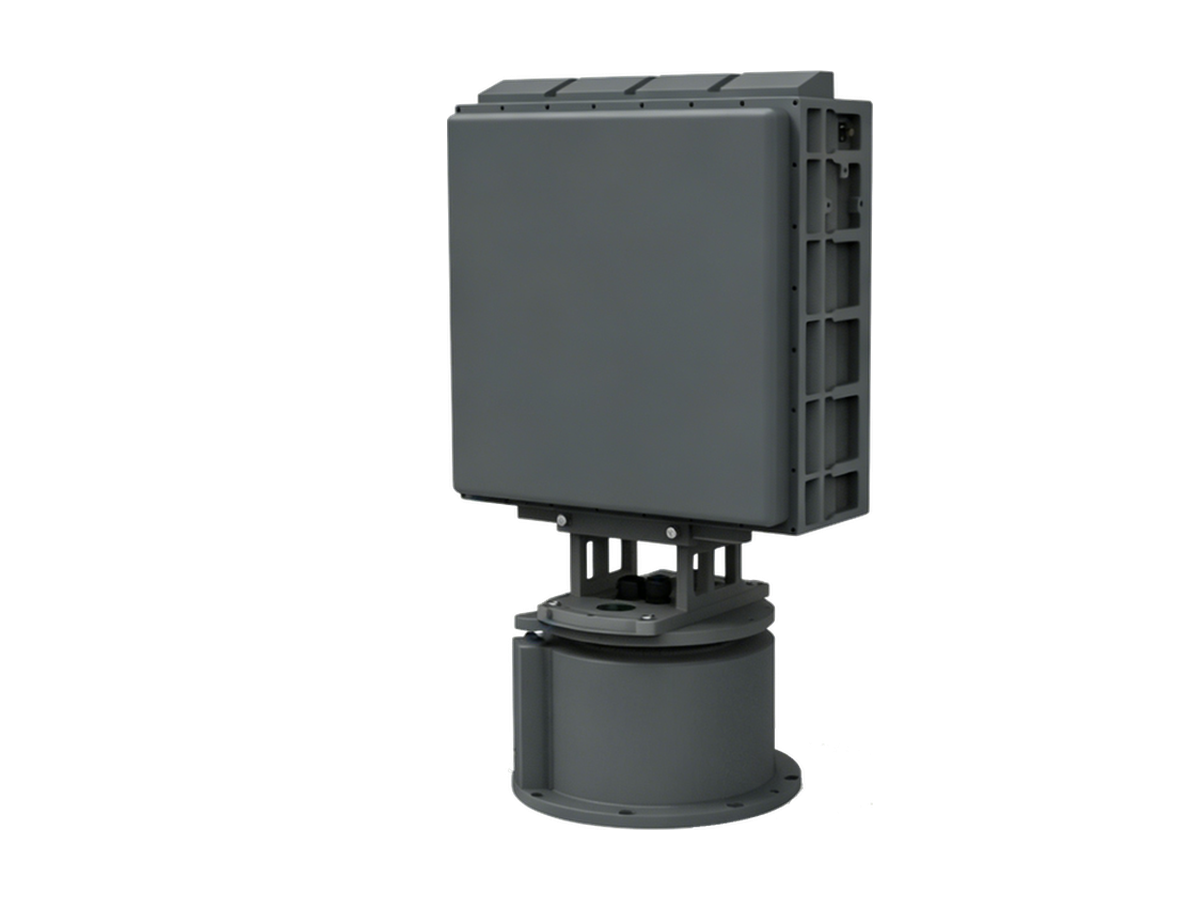
Need Counter-Drone Radar for Your Site?
CR series low-altitude surveillance radars detect RCS 0.01 m² drones at 3–10 km and classify targets by micro-Doppler — every track outputs with target class and confidence.