
In recent years, with the increasing threat posed by Low Slow Small (LSS) drones, the demand for counter-unmanned aerial vehicle (radar) systems has become increasingly urgent [1-3]. However, whether in academic research or practical applications, technical discussions regarding such radar systems still face numerous unresolved challenges. A variety of counter-drone radar systems have emerged on the market, many claiming excellent performance in drone echo detection, with some systems already procured and deployed at critical sites. Nevertheless, multiple government agencies remain cautious about their actual effectiveness and have initiated several verification projects to assess their reliability.
Against this backdrop, this paper focuses on the application of Automatic Target Recognition (ATR) technology in counter-drone radar systems. By systematically reviewing existing counter-drone detection technologies and providing an in-depth analysis from an ATR perspective, this paper further explores core challenges and optimization pathways, primarily from two dimensions: target characteristics and detection technologies:
- Clarifies that radar detection encompasses two independent stages: “signal detection” and “target recognition,” emphasizing that target recognition should break away from traditional tracking-based methods.
- Points out that counter-drone radar systems primarily target LSS drones, typically referring to small aircraft with a Radar Cross-Section (RCS) below 2 m², flight speeds under 200 km/h, and operational altitudes below 1000 meters. According to current classification standards, these mainly cover Group 1 and Group 2 categories of drones.
- Divides ATR performance into four levels: “Detection,” “Classification,” “Identification,” and “Description,” and differentiates between “trajectory discrimination” and “micro-Doppler recognition” methods from an ATR technical perspective.
- Demonstrates through practical cases that integrating ATR technology can significantly enhance system performance—not only improving drone detection range and recognition accuracy but also substantially enhancing overall situational awareness. ATR technology is expected to drive the evolution of traditional 3D counter-drone radar systems into 4D systems (providing three-dimensional position and one-dimensional attribute information), comprehensively boosting detection efficacy. This progress indicates that counter-drone radar systems will achieve broader and more reliable applications in military, civilian, and commercial fields.
1 Overview of Drone Threats
Drone threats can generally be categorized into those targeting civilian facilities and military objectives. Civilian scenarios emphasize control and management, while military applications focus more on countermeasures; however, both rely on efficient, accurate, and real-time drone detection technologies.
1.1 Threats in the Civilian Domain
In the civilian domain, “unauthorized” drone incursions disrupting civil aviation airports have become a typical threat, with frequent related incidents. For example, on December 19, 2018, London Gatwick Airport in the UK was completely shut down due to drone sightings nearby, affecting over 140,000 passengers, canceling more than a thousand flights, and halting airport operations for 36 hours [4]. This incident highlighted the urgent need for airports worldwide to strengthen security strategies to address drone risks.
In response, the UK government implemented several measures, including establishing a 5-kilometer no-fly zone around airports (Figure 1) and introducing counter-drone systems (C-UAS) such as Israel’s “Drone Dome.” However, the airport experienced another drone disruption incident in 2019, indicating that existing systems are still not entirely reliable. Reasons may include operators evading detection, coordinated disruptions by multiple operators, and other complex scenarios.
Figure 1: Schematic of the drone no-fly zone around UK airports (Image source: CAADroneCode)
Disclaimer: The copyright of this article belongs to the author(s). It is intended for academic exchange only and does not represent the position of any institution. For content-related issues or copyright disputes, please contact us.
üîç Keywords:
Counter-drone radar, ATR technology, LSS drones, radar target recognition, drone detection, 4D radar, C-UAS systems
Further Reading
- arXiv: A Survey on Detection, Tracking, and Classification of Aerial Threats Using Radars and Communications Systems - Comprehensive survey of radar-based drone detection, tracking, and classification methods including micro-Doppler and machine learning.
- Frontiers in Communications and Networks: Machine Learning Algorithms Applied for Drone Detection and Classification - Review of machine-learning approaches to drone detection and classification with their benefits and challenges.
- IEEE Transactions on Aerospace and Electronic Systems - Research on topics such as 4D radar, drone detection, and classification, emphasizing theoretical innovation and system integration.
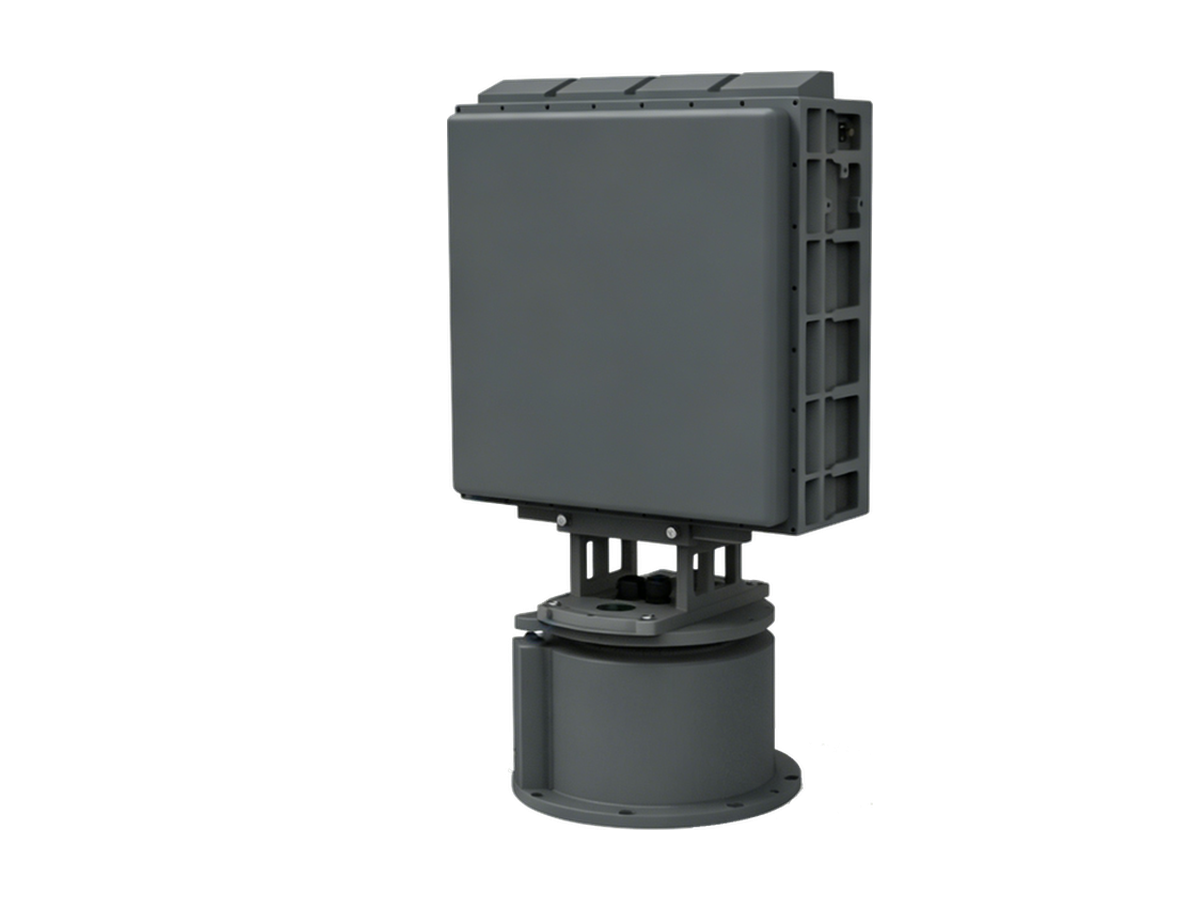
Need Counter-Drone Radar for Your Site?
CR series low-altitude surveillance radars detect RCS 0.01 m² drones at 3–10 km and classify targets by micro-Doppler — every track outputs with target class and confidence.