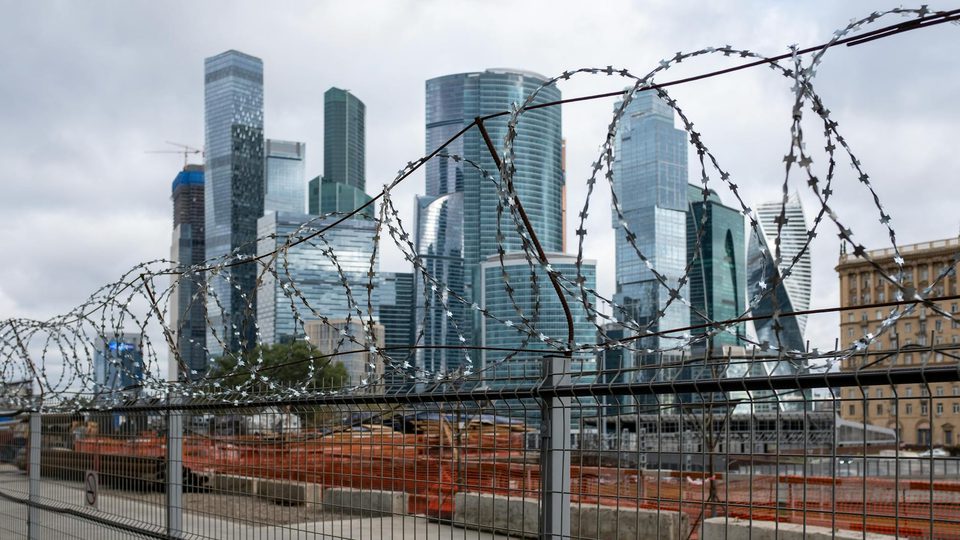
Data center perimeter security is often discussed as if it were a fence problem. Put a barrier around the site, add cameras at gates, and the main physical-security job is done. That view is too narrow for facilities whose availability depends on service roads, generator yards, cooling infrastructure, rooftop plant, and increasingly on low-altitude airspace above the site.
What matters in practice is not only where the legal property boundary sits. What matters is where a threat can first be detected, how long it can be delayed, whether it can be verified quickly, and whether operators can route the event into the right response path before the incident reaches critical equipment or operating areas. That is a system-design problem, not a single-device problem.
This article treats data center perimeter protection as a layered architecture. It builds on the fence, but it does not stop there. The goal is to help planners and buyers design a perimeter system that matches how a real site is used: vehicles and contractors at the edge, utility assets in exterior yards, exposed infrastructure on the roofline, and in some projects a need for low-altitude awareness above the campus.
Start With Availability and Response Time
Data centers are unusual because physical security serves an availability mission, not only a trespass mission. A nuisance alarm at a fence corner is inconvenient. An event near fuel systems, cooling plant, or rooftop mechanical equipment can become an availability issue much faster.
That changes the design logic. A good perimeter system should begin by identifying:
- which exterior assets are operationally critical,
- how quickly an unauthorized person or vehicle could reach them,
- what kinds of approach routes exist at grade and above grade,
- and how much time the operator workflow actually needs to interpret and escalate an event.
This is where NIST and CISA guidance remains useful even though it is not written specifically for one data center site. NIST physical-security controls treat the protection boundary as part of a broader safeguard model involving physical access, monitoring, visitor control, and environmental protection. CISA’s detection-and-delay guidance makes the same point in operational language: detection only matters if it happens early enough, and barriers only matter if they buy enough time for a response to work.
So the first design output should not be a camera list. It should be a time-and-zone model:
- outer boundary approach time,
- fence or gate breach time,
- travel time from breach point to critical yard or building face,
- roof access time,
- and operator verification plus escalation time.
Once those intervals are visible, the sensor architecture becomes easier to justify.
Treat the Site as Multiple Exterior Zones
A data center perimeter system becomes stronger when the site is split into operational zones rather than treated as one continuous strip of fence.
The most common zones are:
- the boundary zone,
- gate and vehicle-control points,
- service and utility yards,
- the building face and roofline,
- and low-altitude airspace above the protected volume.
Those zones may overlap physically, but they do not ask the same question.
The boundary zone asks whether a person or vehicle is approaching or crossing the protected edge. Gate areas ask whether authorized access is being used appropriately or exploited. Service yards ask whether someone has reached exposed infrastructure such as generators, cooling units, or fuel-handling areas. Roofline monitoring asks whether elevated equipment or access points are exposed. Airspace asks whether an overhead approach can bypass the ground perimeter entirely.
This is why a one-layer perimeter design tends to fail. It may generate alerts at the fence, but it leaves unclear:
- which camera should open first for a service-yard event,
- whether roof-adjacent activity is operationally owned by any sensor at all,
- and whether a fast overhead event would enter the same queue as a routine fence-line nuisance alert.
The better approach is to assign each zone a detection role, a verification role, and a default escalation path.
Detection Should Be Layered by Geometry, Not by Habit
Different zones need different detection behavior.
At the fence line, the best-performing layer is often a combination of fixed visual coverage, fence-adjacent analytics where conditions allow, and in some sites radar or other wider-area awareness when long straight corridors create early-warning opportunities. The key requirement is not only “detect crossing.” It is “detect approach early enough that verification still has context.”
At gates and vehicle lanes, the problem changes. Here, a site may need plate capture, lane ownership, barrier-state awareness, and a cleaner distinction between routine access events and abnormal loitering or bypass behavior. A perimeter system that treats gates as ordinary fence segments usually creates too much nuisance traffic.
At utility yards and exterior plant areas, line of sight becomes more important than sheer device count. Large equipment, tanks, transformers, chillers, or service structures can create masked pockets that are invisible from the main boundary layer. In these areas, the system should be designed around whether the operator can see movement around critical assets, not only whether the operator can see the asset itself.
Roofline design is where many data center projects become weak. Roof equipment is often visually visible from somewhere, but not operationally owned. The cameras that can technically see the roof are not placed or preset for roof-edge verification. The result is a gap between “visible on paper” and “actionable in operations.”
If low-altitude security matters, the design should explicitly decide whether the site needs:
- broad radar cueing,
- RF or Remote ID context where legally and operationally relevant,
- or only optical observation of low, slow, obvious overflight.
That answer depends on threat model and response authority, but the architectural rule is stable: airspace detection should not be hidden inside a generic fence-surveillance requirement.
Verification Quality Matters More Than Raw Alarm Count
A perimeter system becomes operationally useful only when the verification layer is faster and more reliable than the alert layer is noisy.
For data centers, that usually means:
- fixed cameras that hold contextual views of fences, corners, and service lanes,
- PTZ or higher-detail views that are tied to realistic presets rather than to wishful free-form joystick work,
- operator queue rules that identify the zone before the event opens,
- and event cards that already include the best first-look visual or sensor context.
This is especially important because data center sites often have regular authorized movement:
- contractors,
- maintenance vehicles,
- deliveries,
- service staff,
- and occasional rooftop work.
If the system cannot separate these patterns cleanly, operators either drown in nuisance work or become desensitized to the alarm channel. That is why queue discipline is part of perimeter design. Verification is not just camera performance. It is how quickly a queue item explains where the event is, why it matters, and what view should answer it.
A useful event card should already tell the operator:
- zone,
- sensor source,
- whether the event is boundary, yard, roofline, or airspace,
- whether there is corroborating evidence,
- and what escalation path applies if the event is confirmed.
Without that structure, the perimeter system turns into a collection of notifications rather than a designed workflow.
Delay, Communications, and Evidence Need to Be Designed Together
The phrase “detection, delay, response” is often repeated, but projects still design those elements separately.
For a data center perimeter, delay comes from different sources:
- fencing and walling,
- gate hardware,
- stand-off distance,
- controlled lane geometry,
- roof-access control,
- and the time needed to move from outer yard to critical plant.
Those delay layers should be mapped directly to sensor placement. If a service yard can be crossed in seconds, then a late camera confirmation is not operationally meaningful. If a roof access point can be reached only after multiple barriers, then the system can afford a different escalation posture there.
Communications architecture also matters more than many perimeter projects acknowledge. A data center security system should decide in advance:
- what links are primary and backup,
- where video and event metadata are stored,
- how time synchronization is handled,
- which events must be retained as evidence,
- and what happens when one sensor layer is degraded.
If a perimeter alarm opens but the associated video path is delayed, missing, or poorly timestamped, the site does not really have a complete perimeter system. It has an unreliable notification pipeline.
This is where data center projects should be stricter than ordinary commercial sites. Because the environment is operationally controlled, the buyer can ask harder questions:
- What is the maximum acceptable delay from alert creation to first verification view?
- Are event timestamps synchronized across sensors?
- Are gate events, video clips, and operator actions stored under one incident record?
- Can the site replay a perimeter event without manually stitching evidence from separate systems?
Those are system-design questions, but they materially change the value of the perimeter layer.
Common Design Mistakes
Several mistakes repeat across data center perimeter projects.
Treating the fence as the whole perimeter model
This ignores service yards, building face transitions, roof access, and overhead approach paths.
Designing for detection without designing for verification
The project creates lots of alarms but cannot answer them quickly with the right camera or evidence view.
Ignoring operational traffic patterns
Contractors, deliveries, and maintenance create legitimate movement that can overwhelm weak queue logic.
Leaving utility yards visually exposed but operationally unowned
Important equipment can be seen somewhere, but no sensor package is actually responsible for monitoring it well.
Treating airspace as a note instead of a zone
If overhead intrusion matters, it needs explicit detection, verification, and escalation logic.
Separating security design from evidence design
Without synchronized records, the site cannot validate what happened or improve the workflow honestly after an incident.
Conclusion
Data center perimeter security system design should begin with availability, time, and geometry. The fence is part of the answer, but it is not the whole answer. Real protection depends on whether the site can detect early enough, delay meaningfully, verify quickly, and route events by zone instead of by generic alarm type.
The practical design takeaway is simple: model the perimeter as boundary, gate, yard, roofline, and where needed airspace. Give each zone a defined detection role and a defined verification path. Then make sure the communications, queue logic, and evidence record are strong enough that the operator can act before the protected site loses time.
Related Reading
- Perimeter Zoning Strategy for Data Centers: Fence, Roofline, and Airspace
- Console Layout and Screen Zoning for Multi-Sensor Operations
- Alert Triage Design for Multi-Sensor Security Platforms