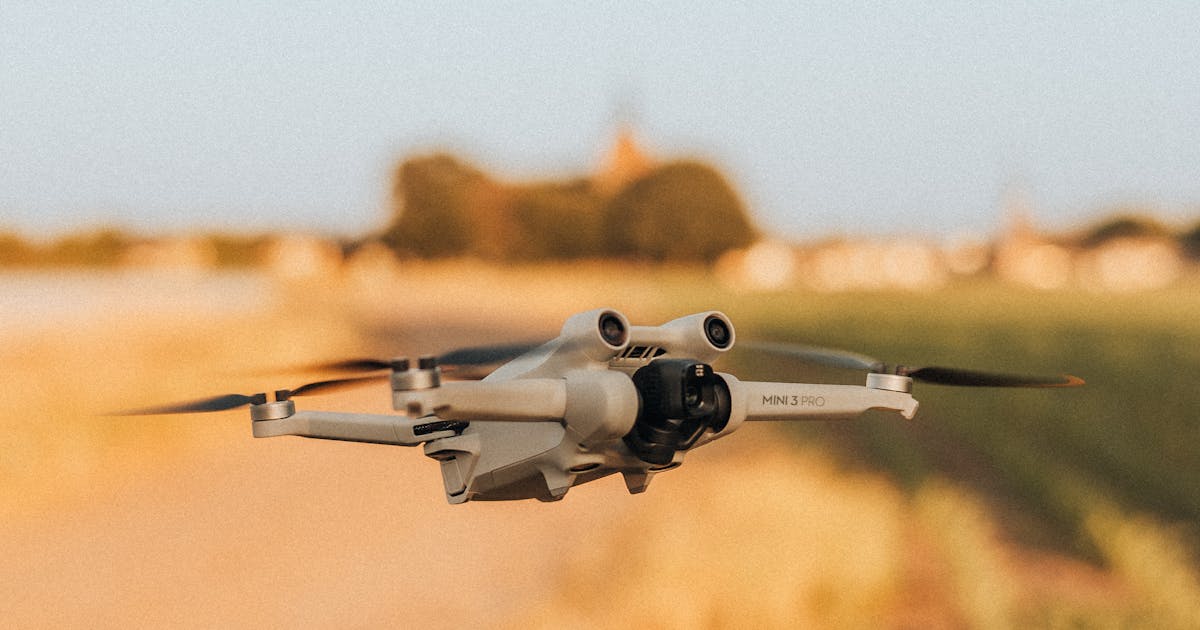
Low, slow, and small targets are one of the central problems in low-altitude security. The phrase is often used in counter-UAS discussions because many small drones do not behave like conventional aircraft. They may fly close to the ground, move slowly, hover, follow buildings or terrain, and present only a very small physical and electromagnetic signature.
That combination is what makes the problem difficult. A target can be easy to describe in a meeting and still be hard to detect reliably at a real site. A small quadcopter near a roofline, a tree belt, a fence, or a busy service road is not just a smaller aircraft. It is a weak, low-altitude, often intermittent signal inside an environment full of other movement and reflections.
For planners, the important point is simple: low, slow, and small is not a slogan. It is a target profile that affects sensor choice, radar placement, alert logic, verification workflow, and response timing.
What Low, Slow, and Small Means
The three words describe different parts of the detection problem.
Low means the target operates close to the ground, infrastructure, vegetation, water, or terrain. This reduces line of sight and places the target in the same part of the scene where clutter is strongest. Buildings, towers, cranes, trees, vehicles, waves, and ground reflections all compete for attention.
Slow means the target may have a low closing speed relative to the radar. Many radar systems use motion and Doppler information to separate moving targets from background clutter. When a drone moves slowly, crosses tangentially, or hovers, it may be harder to separate from non-threat movement and environmental effects.
Small means the target has limited physical size and often a low radar cross section. A small airframe, plastic structure, compact motors, and irregular orientation can produce a weak return. The return may also change as the drone turns, pitches, or presents a different aspect to the sensor.
These traits are manageable on their own. Together they create a harder operating case: a weak target, close to clutter, with limited motion cues and short warning time.
Why Low Altitude Changes the Detection Problem
Low altitude is not only about height. It changes the geometry of the whole surveillance problem.
Radar needs line of sight. A target flying behind a building, below a roof edge, behind a tree line, or along a terrain fold may not be visible from a poorly placed sensor. Even when it is visible, the radar may see the target against a complicated background instead of against clear sky.
This is why a circular range number on a datasheet can be misleading. A radar may perform well in open conditions but lose useful coverage in a built-up site if it is mounted too low, blocked by structures, or asked to watch through cluttered sectors. A low-altitude security project should therefore start with site geometry: protected zones, approach corridors, blind areas, sensor height, and the response time needed after an alert.
Low altitude also shortens decision time. A drone that appears from behind a building or tree line may already be near the asset by the time it is detected. In that kind of environment, the workflow after detection matters as much as the first detection itself.
Why Slow Targets Are Often Misunderstood
Slow targets are not automatically easy targets. In everyday thinking, slower movement sounds easier to observe. In radar processing, the answer depends on the scene, waveform, filtering, and how the target moves relative to the sensor.
Many systems use Doppler information to distinguish moving objects from static background. A target with clear radial motion can stand out because its frequency shift differs from the environment. A target with little radial motion, a crossing path, a stop-and-go pattern, or a hover may provide weaker separation.
The environment complicates this further. Tree movement, fans, rotating machinery, vehicles, birds, water surfaces, and weather effects can all create motion-like signatures. A radar cannot simply accept every small movement as a drone. If it does, operators drown in false alarms. If it filters too aggressively, it may miss slow or hovering targets.
Good low-altitude radar performance is therefore a balance. The system needs enough sensitivity to keep weak targets, enough processing discipline to suppress clutter, and enough track logic to avoid turning every flicker into an alarm.
Why Small Targets Do Not Have One Fixed Signature
Small drones are not equally visible from every angle. Their radar return changes with size, material, geometry, payload, propeller motion, range, frequency band, and aspect angle. A drone may return more energy from one direction and much less from another.
This matters because buyers sometimes ask for a single guaranteed range against “a small drone.” That question is understandable, but it hides important variables. A larger multirotor, a compact racing drone, a fixed-wing foam aircraft, and a hovering quadcopter near a wall are different detection cases.
Radar cross section is also not the whole story. A target with a small average return may still be trackable if the radar has clear line of sight and the scene is clean. A target with a slightly stronger return may be harder to use operationally if it appears in a cluttered urban sector with many competing reflections.
The practical planning question is not only “Can the radar see a small target?” It is “Can the system keep a useful track on the target in this site, at this altitude, with enough warning time for the operator?”
The Role of Clutter and False Alarms
Low, slow, and small detection is inseparable from clutter management. Clutter is not just background noise. It is often structured, changing, and site-specific.
In an industrial facility, clutter may come from vehicles, cranes, metal structures, rotating equipment, and roof edges. At a coastal site, waves, boats, and weather effects may dominate. Around a data center or government campus, fences, trees, service roads, and nearby buildings may shape the radar picture.
False alarms are not only an annoyance. They change behavior. If operators receive too many low-confidence alarms, they become slower to react. If the system suppresses too much, it may reduce nuisance alerts while weakening real detection. This is why a good design treats false alarm management as an operator workflow issue, not only as a sensor setting.
Useful systems usually combine several ideas:
- zone-based alerting around protected areas,
- track confirmation before escalation,
- filtering tuned to the site,
- sensor cueing for EO/IR verification,
- and logs that let teams review why an event was accepted or rejected.
How Radar Helps
Radar is valuable for low, slow, and small targets because it can search continuously, work day and night, and measure movement without needing visible light. It can provide early awareness before a camera has a clear view or before an operator knows where to look.
But radar is not magic. The radar must be selected and placed for the target profile. A system designed for larger aircraft or open airspace may not be optimized for small drones near the ground. A radar with impressive maximum range may still be the wrong choice if update rate, angular coverage, blind zones, clutter rejection, or integration workflow do not match the site.
For counter-UAS and low-altitude security projects, the most useful radar questions are practical:
- What target profile is the site trying to detect?
- At what altitude and approach direction does detection matter?
- How much warning time is required?
- What clutter sources exist in each sector?
- Can the radar maintain a track, not only produce a detection point?
- Can the track cue a camera, operator queue, or command platform?
Those questions lead to better system design than asking for one maximum range number.
Why Multi-Sensor Verification Still Matters
Low, slow, and small targets are usually best handled with a layered workflow. Radar can provide wide-area search and tracking. RF detection can add signal context when a drone is transmitting. EO/IR cameras can support visual confirmation, evidence, and operator confidence.
The layers do not do the same job. Radar may say that a physical object is moving through a zone. RF may suggest a control or identification signal. EO/IR may help determine whether the object is actually a drone, a bird, a balloon, or something else. A command platform can combine those inputs into an event that operators can act on.
This is especially important for slow or ambiguous tracks. A low-confidence radar-only alert may not justify immediate escalation. But if the same event appears in a protected zone, follows an abnormal path, and can be verified by camera, it becomes more operationally meaningful.
Common Planning Mistakes
The first mistake is treating low, slow, and small as a generic label. Different sites have different hardest targets. An airport, prison, power plant, port, logistics park, and urban campus may all care about small drones, but the geometry and response workflow are different.
The second mistake is relying on maximum range alone. Range matters, but so do sensor height, update rate, target size, clutter environment, classification confidence, and whether the system can hand the event to a human or platform in time.
The third mistake is ignoring the confirmation layer. Detecting a weak target is only the beginning. The operator still needs to know whether the event is real, relevant, and actionable.
The fourth mistake is underestimating commissioning. Low-altitude systems often need site-specific tuning. A useful acceptance process should test realistic approach paths, low-altitude sectors, slow movement, and representative clutter conditions rather than only a clean demonstration flight.
What This Means for Procurement
When writing requirements, describe the target profile and operational scenario clearly. Instead of only asking for “drone detection to 5 km,” specify target type, expected altitude, protected zones, detection-to-alert workflow, verification method, and false alarm expectations.
For example, a better requirement might state that the system should detect and track small multirotor UAV activity in defined low-altitude approach sectors, support camera cueing for operator verification, and provide usable alarms within the response time needed by the site. That kind of requirement gives suppliers a real engineering problem rather than a marketing number.
Low, slow, and small targets are difficult because they sit at the intersection of physics, site geometry, signal processing, and human response. A strong system is not the one that promises the largest number. It is the one that keeps useful awareness in the places where a small drone would actually appear.