
I. Overview
1. Background Introduction
In recent years, drone technology has rapidly developed in China, with its application scenarios continuously expanding. As technical barriers significantly lower, ease of operation and payload capacity keep improving, and equipment prices gradually decrease, drones are rapidly becoming widespread.
However, the broad application of this technology also brings non-negligible security risks. Drones may be used by criminals for smuggling, reconnaissance, and even attacks, posing serious threats to public safety and personal privacy. Especially in China, the frequent occurrence of “black flight” (unauthorized flights) and disorderly flights of consumer-grade drones has become increasingly prominent due to the lack of effective regulatory measures.
Prisons, as highly sensitive facilities within the national judicial system, typically have strict ground security and contraband control mechanisms. However, they still face significant shortcomings in countering drone threats from the air. Existing methods struggle to effectively prevent drone intrusions, making it urgent to establish an intelligent prevention and control system capable of monitoring and countering “low, small, and slow” targets.
Public reports indicate that multiple cases of drones being used to deliver weapons, drugs, and communication devices have occurred in the U.S. prison system, with most incidents discovered only after the fact. This shows that the threat of drones to prison security has evolved from a potential risk to a real-world challenge that must be taken seriously.
2. Demand Analysis
Prison management urgently requires a comprehensive drone control system integrating detection, identification, and countermeasure functions. The system should be capable of long-range target detection, automatically identifying and tracking drones before they are visible to the naked eye, and assessing threat levels based on parameters such as flight direction and speed.
Under the unified coordination of the central control system, corresponding countermeasures can be initiated based on the actual threat, such as driving away or forcing target drones to land. Additionally, to compensate for blind spots in fixed equipment monitoring and enhance emergency response capabilities, portable handheld countermeasure devices should be equipped to achieve all-weather, three-dimensional security coverage.
II. System Composition and Functions
The drone detection radar system primarily consists of three parts: the detection subsystem, the control subsystem, and the central control subsystem, working together to achieve full-process management of drone early warning, identification, and response.
1. Detection Subsystem
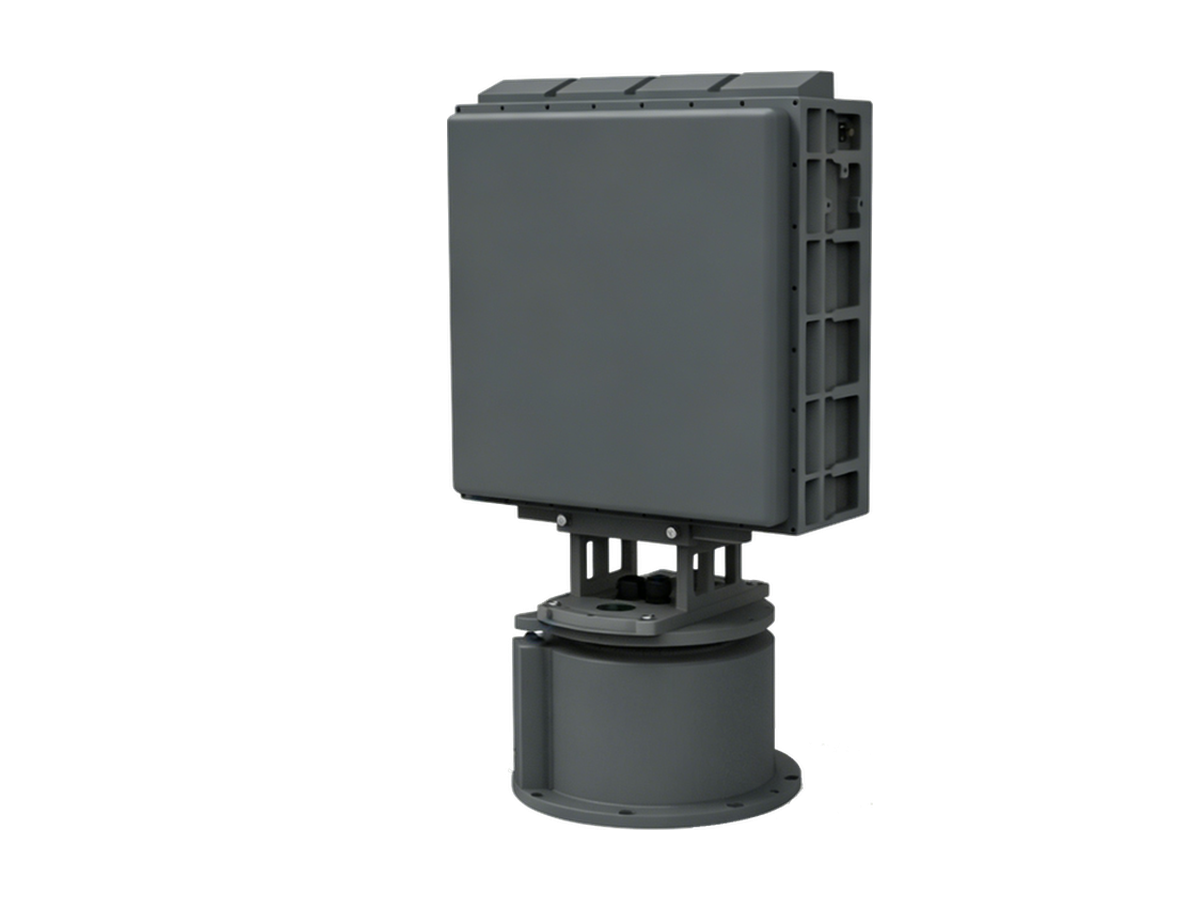
The detection subsystem serves as the “eyes” of the entire system and is the core unit for drone early warning. This system employs continuous wave radar technology optimized for “low, small, and slow” targets, supporting 24/7 uninterrupted airspace monitoring.
Within a range of 3–4 kilometers, it can effectively detect common drone models such as the DJI “Phantom 3,” precisely calculating their position, speed, heading, and flight trajectory to achieve automatic target tracking and intelligent threat assessment.
2. Control Subsystem
The control subsystem acts as the “arms” of the system, responsible for executing actual countermeasure tasks. This system consists of multiple directional transmitters deployed along the prison perimeter, with each device covering a specific sector and forming a three-dimensional “electronic barrier” through cross-networking.
Once a drone intrudes into the protected area, it will immediately be subjected to high-intensity electromagnetic interference, causing it to lose control signals and triggering an automatic return-to-home or forced-landing mechanism. When necessary, the system can also simultaneously interfere with its navigation and positioning signals to achieve a precise forced landing. Handheld countermeasure devices serve as auxiliary means, providing flexible and mobile emergency handling capabilities.
3. Central Control Subsystem
The central control subsystem is the “brain” of the entire system, responsible for coordinating with the detection subsystem, receiving real-time target data, and automatically initiating corresponding countermeasure mechanisms based on preset strategies. After the mission is completed, the system will automatically shut down control devices to reduce energy consumption and electromagnetic radiation impact.
The system also features remote device management functions, supporting configuration modifications and real-time monitoring of operational status to ensure the stable and efficient operation of the entire system.
Further Reading
- SAC/TC100 — National Technical Committee for Security and Alarm Systems Standardization
- Dedrone: Fixed-Site Drone Detection Solution - Reference architecture for fixed-site drone detection that helps frame purchasing requirements.
- Robin Radar: Counter-UAS Radar Solutions - Vendor overview of counter-UAS radar capabilities useful when drafting specification and tender criteria.
- Prison Aerial Security (application)
- Prison Security Management Systems
- Counter-UAS Radar Datasheet Checklist
- How to Write a Counter-UAS Radar Tender
Need Counter-Drone Radar for Your Site?
CR series low-altitude surveillance radars detect RCS 0.01 m² drones at 3–10 km and classify targets by micro-Doppler — every track outputs with target class and confidence.