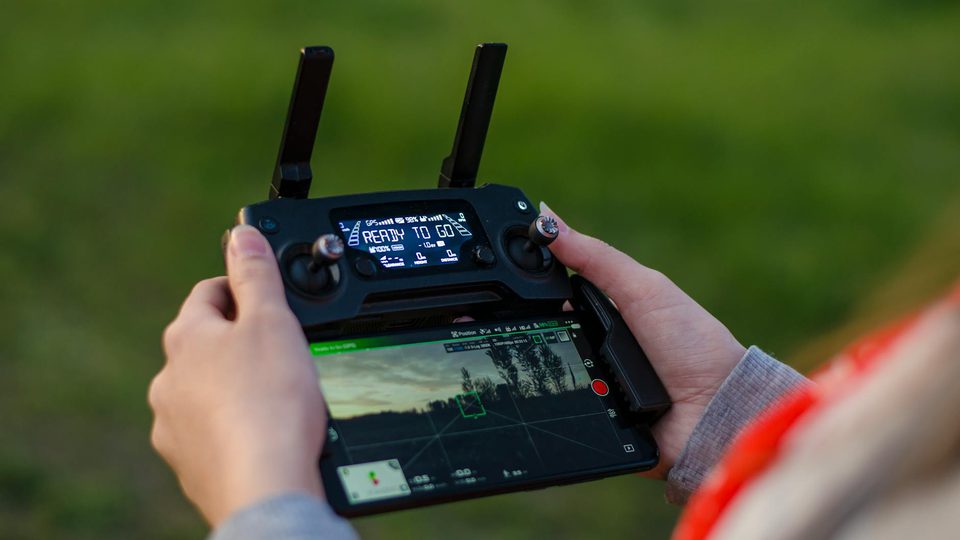
Remote ID reception range is often discussed as if it were a single performance number. In practice, it is not. It is the result of a radio link, and radio links are shaped by transmitter behavior, receiver design, antenna characteristics, path loss, and the environment between the aircraft and the receiving system.
That distinction matters because buyers and operators regularly mix together three different questions. One is a compliance question: does the aircraft broadcast Remote ID information? Another is a consumer-receiver question: can a nearby phone or handheld app hear it? The third is a system-design question: can a site reliably receive and use those messages in the sectors and distances that matter operationally? Those are related questions, but they are not the same.
The practical outcome is that Remote ID coverage should be planned like any other RF monitoring layer. FAA rules tell you what a compliant broadcast is supposed to provide. They do not guarantee that every receiver in every location will hear every message at every useful distance. If a project treats compliance as if it automatically implied dependable reception, the site will almost always overestimate what the Remote ID layer can do.
FAA Remote ID Defines the Broadcast, Not Your Site Coverage
The FAA defines Remote ID as the ability of a drone in flight to provide identification and location information that can be received by other parties through a broadcast signal. The FAA’s Remote ID materials also make clear that the two main compliance paths use radio-frequency broadcast methods such as Wi-Fi and Bluetooth.
That definition is important because it explains what the rule is trying to create: a cooperative broadcast layer. It does not create a guarantee that every site receiver will hear the message equally well in every condition. It also does not make the practical reception problem disappear.
The FAA’s summary materials further distinguish between Standard Remote ID aircraft and aircraft using a Remote ID broadcast module. In the broadcast-module path, the module provides identification and location information about the drone and its takeoff location, and operations are limited to visual line of sight. That matters because the transmitter path, installed hardware, and operating concept can differ from one aircraft to another.
So the first correction is conceptual. Reception range is not the same thing as Remote ID compliance. Compliance tells you what a lawful cooperative broadcast should look like. Reception range tells you whether your monitoring setup can hear that broadcast usefully.
Remote ID Range Is Governed by the Same Link Factors as Other Short-Range RF Systems
The Bluetooth SIG’s range guidance is a useful anchor here because it states the problem directly. Effective range depends on transmitter power, receiver sensitivity, antenna gain, and path loss. Those are not niche engineering details. They are the main reasons why one Remote ID receiver setup can perform very differently from another even when the aircraft is broadcasting correctly.
Transmit power
A stronger effective transmit level usually improves the chance that the message can be heard farther away. But actual transmitter behavior depends on device implementation, power management, and protocol choices. The receiving site does not control these variables.
Receiver sensitivity
Receiver sensitivity determines how weak a signal can still be decoded. This is one of the biggest reasons why a site-designed receiver can outperform a casual consumer device. If two receivers have different sensitivity and front-end quality, they do not have the same practical reception range.
Antenna performance
Antenna gain, orientation, placement, and ground interaction matter on both ends of the link. Bluetooth’s own range materials emphasize that antenna characteristics strongly affect performance. In Remote ID monitoring, this means a poorly placed receiver antenna can throw away range even when the air interface itself is working correctly.
Path loss
Signal strength falls with distance, and it falls faster when the environment is unfavorable. Buildings, vehicles, metal structures, terrain edges, fences, towers, and even dense site clutter can degrade the path. This is why “works in an open field” and “works at an industrial site” are not the same claim.
So the shortest honest summary is this: Remote ID reception range is a link-budget problem, not a label problem.
Receiver Class Changes the Practical Result
One of the most common misunderstandings is to assume that any receiver hearing Remote ID proves that the site has meaningful Remote ID coverage.
That is not necessarily true.
A phone-based or handheld receiver may be useful for spot checks, demonstrations, or local awareness. But a site designed for operational monitoring asks more of the receiver:
- stable scanning,
- dependable metadata capture,
- repeatable antenna behavior,
- better placement,
- cleaner integration into incident workflow,
- and often longer-term duty cycle.
This is why a phone screenshot should not be confused with a coverage design. A dedicated receiver on a mast, rooftop, or well-sited structure may hear compliant broadcasts that a handheld device hears only intermittently. The reverse can also happen if a site receiver is poorly positioned or locally shadowed.
Operationally, the buyer should ask not only “Does it decode Remote ID?” but also:
- At what confidence and consistency?
- In which sectors?
- With what refresh behavior?
- And with what evidence trail into the platform?
Those are system questions, not only radio questions.
Installation Geometry Often Matters More Than People Expect
Because Remote ID commonly uses short-range RF technologies, installation geometry has a large practical effect.
The receiving system’s height, line of sight, and local clutter can all change what the site actually hears. A receiver installed below parapet level, behind rooftop plant, near reflective metal structures, or too close to a noisy equipment cluster may underperform even if the air protocol is correct.
This is also where buyers make a planning mistake. They often talk about one reception number for the whole site. In practice, different sectors can have very different behavior:
- open approach sectors,
- urban canyons,
- waterfront reflections,
- parking and loading areas,
- and roofline-shadowed sectors.
The Bluetooth guidance on path loss is directly relevant here. Obstacles, materials, reflections, and attenuation all influence range. For Remote ID reception, that means buildings and infrastructure are not background details. They are part of the RF system.
So a good Remote ID site plan should ask:
- where the monitoring volume actually begins,
- where the likely arrival sectors are,
- whether the receiver has clear sky and horizon context,
- and where additional receiver points may be needed if one location cannot own the whole volume reliably.
Protocol and Environment Affect Reliability, Not Just Maximum Distance
The FAA’s overview points to Wi-Fi and Bluetooth as the relevant broadcast families, but the practical result still depends on how the message is emitted and how the receiver scans or listens for it.
That matters because the operational problem is usually not “what is the farthest message ever heard?” The operational problem is “how reliably can the site receive current, usable messages in time to support a decision?”
Environmental RF noise can affect that answer. So can multipath, bursty channel occupancy, and the behavior of other 2.4 GHz devices nearby. Industrial and urban sites often have many emitters competing for a similar spectrum environment. A receiver that works well in a quiet test area may behave differently near access points, maintenance equipment, dense electronics, or reflective structures.
That is why maximum anecdotal distance is a poor planning metric. Reliability, continuity, and usable message freshness are more important than a single lucky long-distance decode.
What Buyers Should Ask During Planning and Testing
If a site genuinely cares about Remote ID as part of its awareness layer, the buyer should ask more disciplined questions.
Planning questions
- Is the Remote ID layer being used mainly for cooperative awareness, or is it being asked to carry broader security expectations than it can support?
- Where will the receivers be installed relative to roofline clutter and likely arrival sectors?
- Is one receiver enough, or does the geometry suggest multiple reception points?
- How will the system distinguish a clean decode from an intermittent or low-confidence decode?
Test questions
- In what sectors was the message receivable?
- How stable was reception while the aircraft moved?
- What changed when the aircraft passed behind structures or below roofline?
- Did the site receive the message at the time and place needed for the intended workflow?
- Did the platform preserve the received metadata in a usable incident record?
These questions help the buyer move from “Remote ID is present” to “Remote ID is operationally useful.”
Common Mistakes
Several mistakes create unrealistic range expectations.
Treating compliance as guaranteed coverage
A compliant aircraft may still be weakly received at a poorly designed site.
Using consumer-device anecdotes as system requirements
One phone hearing one aircraft in one environment is not a coverage study.
Ignoring receiver placement
Height, shadowing, nearby metal, and local RF clutter can all change the result materially.
Focusing on maximum distance instead of reliable distance
Operational systems need repeatable, usable reception, not only an occasional long-range hit.
Expecting Remote ID to replace other layers
Remote ID is a cooperative broadcast layer. It does not solve non-cooperative or silent targets.
Conclusion
Remote ID reception range changes because the layer is still governed by ordinary RF realities. FAA rules define the cooperative broadcast and its operating framework, but practical site performance depends on transmitter behavior, receiver sensitivity, antenna design, path loss, and installation geometry.
The practical takeaway is simple. Treat Remote ID coverage as an engineered reception problem, not as a checkbox created by the rule alone. Test it by sector, place receivers deliberately, and judge it by reliable operational usefulness rather than by the farthest anecdotal decode.
Related Reading
- Remote ID vs Basic RF Detection: What Each Layer Actually Adds
- AOA vs TDOA vs FDOA: Which RF Geolocation Method Fits Which Project?
- What Makes an RF Bearing Trustworthy in Real Sites?
Further Reading
Need Counter-Drone Radar for Your Site?
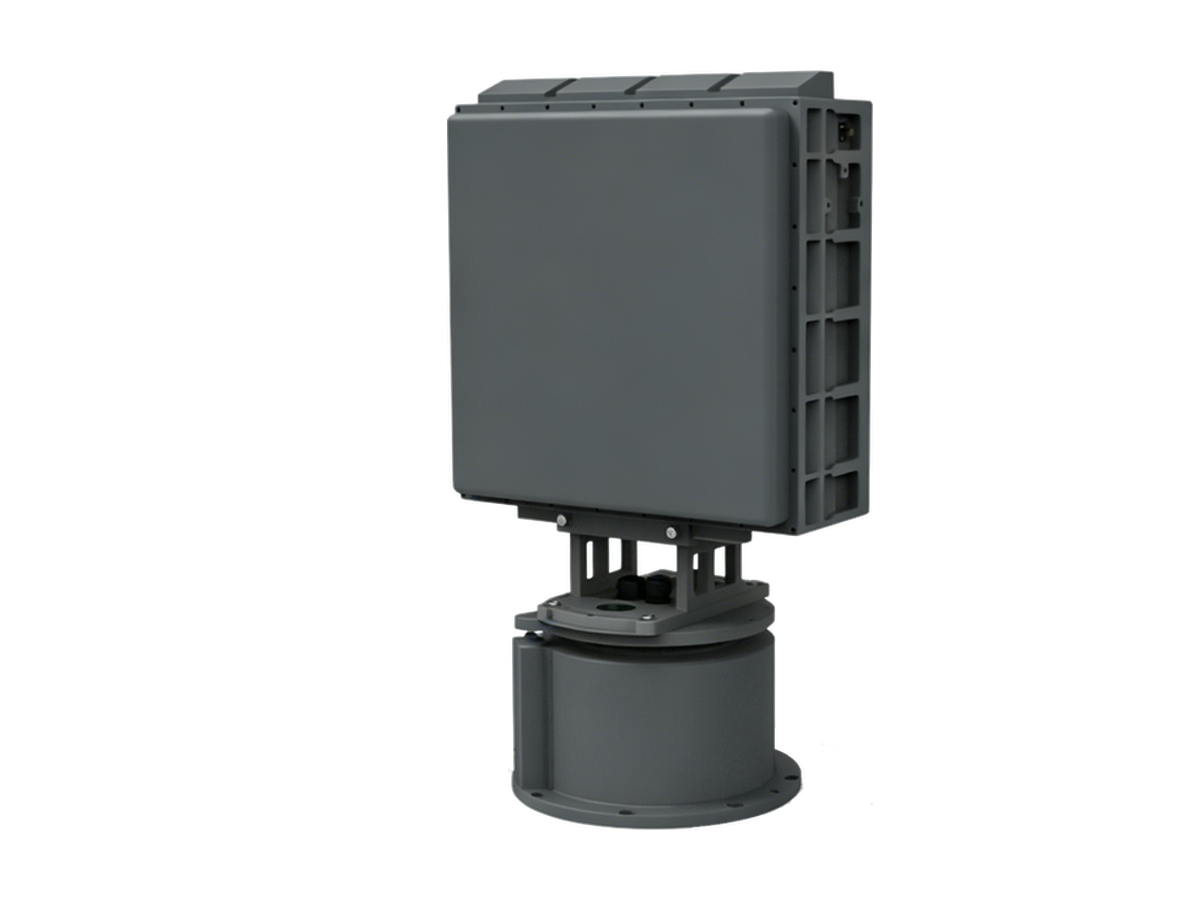
CR series low-altitude surveillance radars detect RCS 0.01 m² drones at 3–10 km and classify targets by micro-Doppler — every track outputs with target class and confidence.