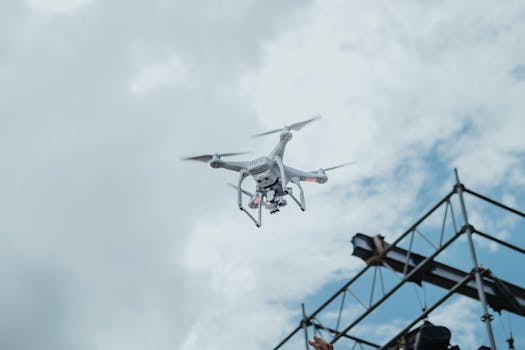
Ask a radar vendor what their system can do, and the first number you hear is a detection range. Ask operators what actually makes their shifts miserable, and you hear a different story: false alarms. Birds, insects, plastic bags, rotating machinery — a radar that detects everything but recognizes nothing turns every shift into alarm fatigue, and real drones drown in the noise.
This is why target recognition has become the defining capability of modern counter-UAS radar. Detection answers “is something there?” Recognition answers “what is it?” — and in low-altitude air defense, the second question is usually the harder one. This article explains how radar-based recognition works, why it trades off against detection, and what buyers should verify before trusting a spec sheet.
Why recognition is the bottleneck
Most fielded counter-UAS radars achieve what engineers call Tier-2 classification: under stable tracking conditions, they can sort targets into coarse classes — drone, bird, person, vehicle, clutter. That sounds adequate until you consider the operating environment. Airports, wetlands, urban rooftops, and forest edges are full of birds, and a small bird in level flight has roughly the speed and radar cross-section of a small drone. Track data alone cannot separate them.
The consequence is structural: if classification is unreliable, the system must either alarm on everything (and exhaust its operators) or raise its alarm threshold (and risk missing real drones). Neither is acceptable at a critical-infrastructure site. Recognition quality is what determines which failure mode a system suffers from.
Micro-Doppler: the rotor’s fingerprint
The feature that changed this picture is the micro-Doppler signature. A target’s bulk motion produces one Doppler shift, but moving parts on the target — spinning rotors, flapping wings, swinging limbs — imprint additional, characteristic frequency modulations on the echo. A quadcopter’s rotors generate dense, regular, comb-like spectral lines; a bird’s wingbeat is a slower, reciprocating pattern that looks entirely different in the time-frequency domain. For a deeper introduction to the phenomenon itself, see our beginner’s guide to micro-Doppler and the more technical micro-Doppler signature explainer.
Two physical factors determine how well a radar can exploit micro-Doppler:
- Wavelength. Shorter wavelengths are more sensitive to centimeter-scale motion. Ku- and Ka-band radars resolve small rotors far better than lower-frequency systems — one of the practical differences covered in Ku vs. Ka band radar.
- Dwell time. The longer the beam stays on the target, the richer the micro-Doppler information. Fast-scanning radars refresh the whole volume quickly but spend little time per target — a direct trade-off with classification quality, discussed further below.
On the processing side, the standard pipeline applies a short-time Fourier transform (STFT) to produce time-frequency maps, then feeds them to a trained classifier — typically a convolutional neural network. The output is no longer a bare plot but a track with an attached class label and confidence: drone, bird, or other.
The honest limits of classifier-based recognition
Classifier-based recognition works, but its limits deserve equal attention:
- Range. Micro-Doppler features need a healthy signal-to-noise ratio, so classification range is always shorter than detection range. A radar that detects an RCS 0.01 m² drone at 5 km may classify it reliably only inside 3–4 km. When comparing products, ask for both numbers — the same discipline we recommend in detection range vs. tracking range.
- Training data. A classifier is only as good as its training set. Models trained on a handful of popular drone models can fail on unfamiliar airframes, and the feature extraction inside a deep network is not interpretable — when it misclassifies, it cannot tell you why. Vendor claims here carry the most marketing inflation of any specification.
- Dwell vs. scan. Recognition wants long dwells; wide-area surveillance wants fast revisits. A mechanically scanned single-face radar that stares to classify one target is momentarily not scanning everything else. How an architecture balances update rate and revisit time against recognition dwell is one of the real differentiators between products.
From serial to parallel: how modern architectures resolve the trade-off
Older designs handled detection, tracking, and recognition as a serial pipeline: detect first, track second, classify last — with the radar staring at one target while classifying. Current designs increasingly run these as parallel, interacting processes. The recognition unit processes echoes within the current beam without waiting for an established track, and classification results feed back into detection and tracking: a confirmed bird track can be deprioritized, freeing dwell time for unknown contacts, while a confirmed drone instantly raises its own revisit priority.
The practical result is a track output that carries identity as well as position — sometimes called 4D perception: range, velocity, position, and attribute. For the operator, the screen shows “drone, 2.8 km, inbound” instead of an anonymous dot, and the distinction between detection and tracking extends naturally into classification.
What buyers should verify
Recognition is the specification most likely to be demonstrated well and deployed poorly. Three checks cut through most of the risk:
- Demand a live classification trial. Fly real drones — ideally your own or rented common models — in the actual deployment environment, with birds present, and measure classification accuracy and false-alarm rate. Vendor demo videos are shot under conditions the vendor chose.
- Ask for the classification range separately. Detection range, tracking range, and classification range are three different numbers. Any vendor unwilling to separate them is selling you the best one.
- Write recognition into acceptance. “Bird/drone classification accuracy ≥ X% at Y km in the deployment environment” belongs in the site acceptance test, alongside the detection-range and tracking-range criteria that tenders usually already include.
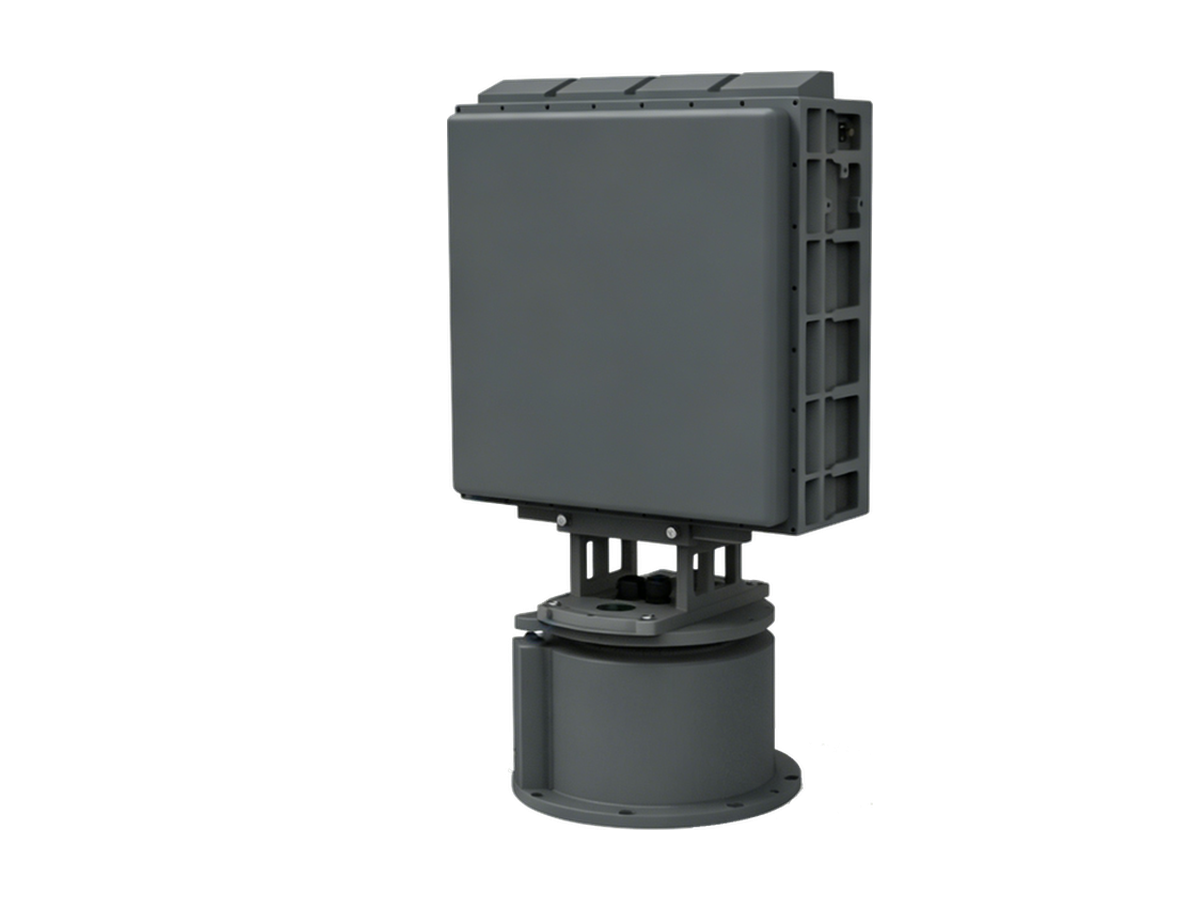
Our CR series low-altitude surveillance radars perform micro-Doppler-based classification and attach a target class and confidence directly to each output track, so command platforms can filter alerts by class. The CR-PK05B, for example, reports classification alongside its 360° track data — the command system sees what each contact is, not just where it is.
Bottom line
Detection range wins brochures; recognition wins deployments. The physics is settled — micro-Doppler gives radar a reliable way to separate rotors from wings — but real-world performance depends on band choice, dwell strategy, classifier training, and honest specification. Evaluate recognition the way you evaluate range: with your drones, in your environment, against written acceptance criteria.
Further Reading
Need Counter-Drone Radar for Your Site?
CR series low-altitude surveillance radars detect RCS 0.01 m² drones at 3–10 km and classify targets by micro-Doppler — every track outputs with target class and confidence.