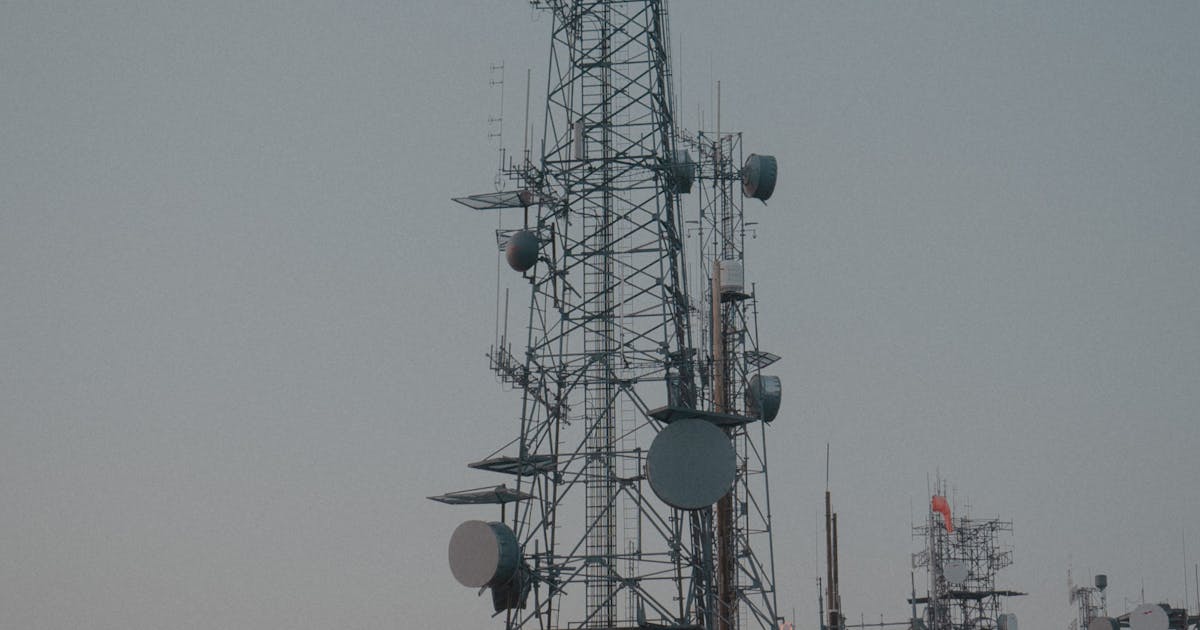
“Which is better, counter-UAS radar or RF detection?” is a common question, but a single absolute answer can lead to a poor system design. Radar and RF detection are not the same kind of tool. They observe different things, support different parts of the workflow, and have different blind spots.
In simple terms, radar detects and tracks physical objects in the air. RF detection listens for and analyzes radio signals from drones, controllers, video links, or data links. Radar answers, “Is something flying there?” RF detection answers, “Is there a relevant radio link active?” In real counter-UAS projects, they are usually complementary rather than interchangeable.
What Radar Does Well
Counter-UAS radar transmits and receives electromagnetic energy to estimate a low-altitude target’s position, range, bearing, height, speed, and track. Its main value is low-altitude situational awareness and continuous tracking.
Radar does not require the drone to transmit a control signal. If the target is inside coverage, line of sight, and the radar’s performance envelope, radar may detect it even if the drone is flying autonomously, following a preplanned route, returning home after link loss, operating with video off, or emitting very little RF energy.
Radar is also well suited to area coverage and track-based alerting. It can report whether a target has entered a warning zone, is approaching a protected asset, or is continuing on a risky path. That track can then cue EO/IR cameras and feed the command platform.
What RF Detection Does Well
RF detection listens for radio activity associated with drones, controllers, telemetry, video transmission, or data links. Its strength is that it may detect radio activity before the drone reaches a protected zone.
Under the right conditions, RF detection may also provide protocol type, manufacturer clues, signal strength, direction estimates, controller-location clues, or device fingerprints. These can be valuable for understanding the source of an event, finding the operator, and supporting enforcement.
If the site has a manageable RF environment and the drone uses common control or video links, RF detection can be very efficient. It does not necessarily need to see the drone body; it can discover risk through link activity.
RF Detection Blind Spots
RF detection depends on receivable and recognizable radio activity. If the drone flies autonomously, follows a preloaded mission, turns off video, uses a low-power link, frequency hopping, encryption, nonstandard communication, or deliberate masking, RF detection can be limited.
Urban sites, industrial parks, airports, and communication-dense areas may contain many radio signals. Wi-Fi, cellular, push-to-talk, IoT devices, microwave links, and other equipment can complicate the background. The RF system must decide which signals actually matter.
RF detection also detects signals, not necessarily the exact airborne target position. It may need antenna arrays, multiple stations, direction finding, or integration with radar and EO/IR to create reliable spatial awareness.
Radar Blind Spots
Radar has limits as well. Small drones have low radar cross section, and low-altitude flight can be blocked by buildings, trees, terrain, walls, and metal structures. Birds, vehicles, water, rain, moving vegetation, and construction equipment can create clutter.
Radar also does not visually identify the target the way a camera can, and it may not know where the controller is. It can provide a track, but link intelligence and operator-location clues often require other sensors.
This is why a radar-only system may detect and track a target but lack RF-side context, while an RF-only system may detect controller activity but miss silent or autonomous flight.
Which Fits Airports, Campuses, or Critical Sites?
If the main requirement is to detect low-altitude objects entering protected airspace, maintain tracks, and cue cameras, radar is usually a core sensor. Airports, energy sites, ports, data centers, borders, and event-security projects often need radar for spatial tracking.
If the main requirement is early awareness of control activity, identification of common drone links, or clues about the operator, RF detection is highly valuable. It is especially useful as an early-warning and link-intelligence layer.
When budget and risk justify it, mature systems often deploy both. Radar confirms what is in the air and how it is moving. RF detection adds information about possible emitters, link type, and controller direction. EO/IR then provides visual confirmation and evidence.
A Practical Combined Workflow
A common workflow looks like this:
- RF detection finds a possible drone link or controller activity;
- radar searches for and confirms whether a low-altitude target is present;
- radar builds a track and checks whether the target enters a risk zone;
- EO/IR cameras slew to the target using radar track data;
- the command platform fuses radar, RF, and EO/IR information into an alert and event record.
The workflow can also start with radar. Radar may detect a low-altitude target first, then the system checks whether matching RF activity exists. If RF is present, confidence increases. If not, the event should not be dismissed automatically, because the drone may be autonomous, silent, or outside the RF detector’s scope.
What Buyers Should Ask
Do not ask only whether radar or RF is better. Ask:
- Is the main threat remote-controlled consumer drones or autonomous flight?
- Is the site’s RF environment clean or crowded?
- Do we need operator-location clues, or mainly airborne target tracking?
- Do we need continuous tracks, camera cueing, and video evidence?
- Can we accept the blind spots of a single-sensor system?
- Can the command platform fuse radar, RF, and EO/IR alerts instead of forcing operators to watch separate screens?
- Will testing include silent flight, complex RF background, and low-altitude blockage?
These questions shift the decision from device comparison to system capability.
Conclusion
Counter-UAS radar and RF detection do not have an absolute winner. Radar is strong at detecting and tracking physical airborne targets. RF detection is strong at discovering and analyzing radio links. Both have blind spots, and both can add unique value.
For serious low-altitude security projects, the safer answer is usually integration: use radar for tracks, RF detection for link intelligence, EO/IR for confirmation and evidence, and command software to turn those inputs into an actionable workflow.