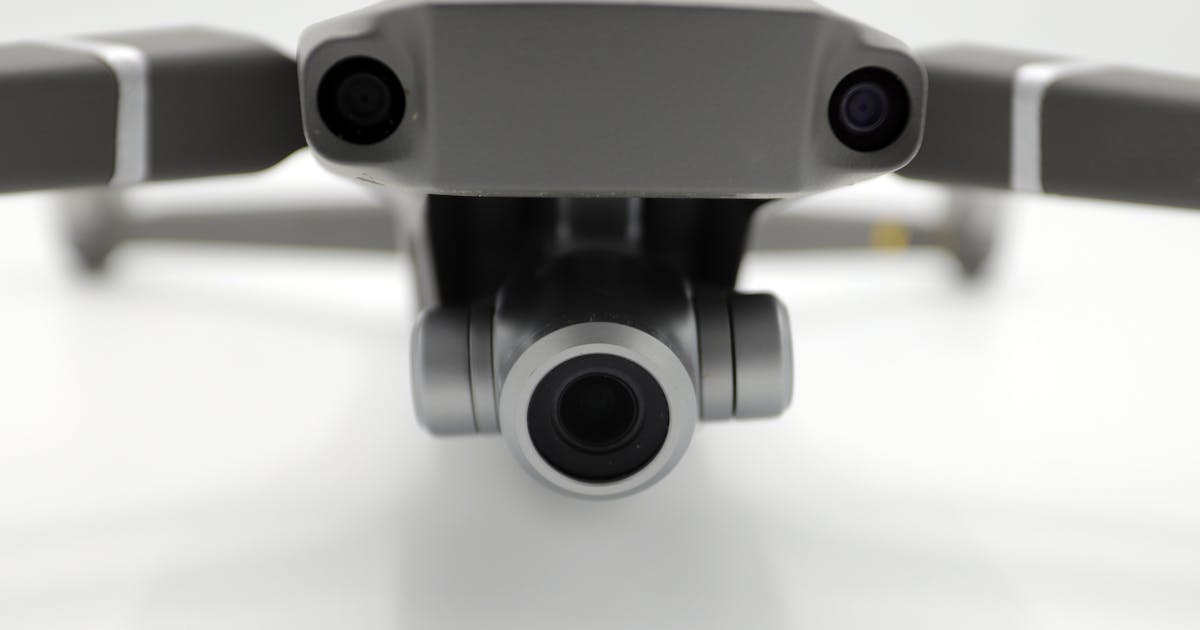
Counter-UAS radar specifications often mention targets such as “RCS 0.01 m².” Many readers assume this means the drone has a physical area of 0.01 square meters, roughly a 10 cm by 10 cm square. That is not what RCS means.
RCS stands for radar cross section. It describes how strongly a target reflects radar energy back toward the radar. It is an equivalent reflection measure, not the real geometric area of the object. RCS 0.01 m² means that, under a particular test or modeling condition, the target reflects radar energy at a level comparable to a reference scatterer of that order.
RCS Is Not Physical Area
A drone can be physically larger than 0.01 m² and still have a small RCS. Radar does not see the outline that a human eye sees. It sees the electromagnetic energy returned after the radar wave interacts with the target. Material, shape, edges, surface angles, internal structure, and rotors all influence the return.
Plastic, composite, carbon-fiber, and foam structures often reflect less energy than large metallic surfaces. A drone that looks sizeable may still produce a weak radar return if its materials and aspect angle are unfavorable.
The opposite can also happen. A small metallic component may create a strong reflection at certain angles. This is why RCS should not be treated as a direct measurement of target size.
What 0.01 m² Represents
RCS 0.01 m² is often used to represent a weak-reflection small drone or compact low-altitude target. It is not a universal standard for all drones, and it does not mean every consumer drone has exactly that RCS. Different models, payloads, attitudes, and radar bands can produce very different values.
In procurement documents, 0.01 m² is often a target assumption. For example, a radar may claim a certain detection range against an RCS 0.01 m² target. The meaning is that the radar was tested or modeled against a weak target condition.
The important phrase is “under specified conditions.” Without altitude, flight path, background, detection probability, false-alarm rate, weather, and test method, the RCS and range number remain incomplete.
RCS Changes with Aspect Angle
RCS is not a fixed label attached to the drone. The same drone may return different signal strength when viewed from the front, side, above, or at an angle. During flight, the drone may turn, pitch, roll, hover, accelerate, or carry different payloads, and all of this changes the radar return.
Multirotor drones also have moving rotors and motor structures. Rotor motion can create micro-Doppler features that help classification, but this depends on range, angle, signal-to-noise ratio, radar band, and processing. It should not be treated as a guaranteed fingerprint in every condition.
When a supplier says “RCS 0.01 m²,” treat it as a representative test or modeling condition, not as a value that remains constant every second in real flight.
Frequency Band and Polarization Matter
The same target may reflect differently in different radar bands. X-band, Ku-band, millimeter-wave, and other bands have different wavelengths, and those wavelengths interact with drone structures differently. Polarization can also change the return.
This means an RCS value from one band should not be blindly transferred to another. For serious evaluation, check whether the supplier’s RCS assumption matches the radar frequency, waveform, polarization, and test method being discussed.
If the test condition is far from the deployment condition, the paper value needs careful interpretation.
How Small RCS Affects Detection Range
The smaller the RCS, the weaker the returned signal usually is. With other factors equal, a small-RCS target is harder to detect at long range and is more vulnerable to clutter, noise, blockage, and aspect changes.
This affects more than first detection. It also affects track stability. A weak target may appear briefly, but if the return fluctuates, the system may struggle to maintain a continuous track. In counter-UAS operations, stable tracking is often more important than one momentary detection.
Small RCS can also reduce classification confidence. The system must decide whether the target is a drone rather than a bird, vehicle reflection, or environmental effect. Weak returns usually make classification more dependent on track behavior, speed, micro-Doppler, sensor fusion, and operator confirmation.
What Buyers Should Ask
When you see a range claim against “RCS 0.01 m²,” do not stop at the distance number. Ask:
- Is 0.01 m² based on a measured target, a calibrated reflector, or a simulation assumption?
- What frequency band, polarization, waveform, and antenna configuration were used?
- Was the target approaching, crossing, hovering, or moving away?
- What altitude and background environment were used?
- What detection probability and false-alarm rate correspond to the range?
- Is the range a first detection distance or a stable track distance?
- How does performance change around buildings, trees, water, or vehicles?
- Can the supplier support site testing or explain real-case conditions?
These questions help determine whether the metric applies to your site.
Conclusion
RCS 0.01 m² is not the drone’s real area. It is an equivalent measure of radar reflection strength. It is useful for comparing radar performance against weak targets, but it must be interpreted together with frequency band, aspect angle, environment, detection probability, false-alarm rate, and track requirements.
In a counter-UAS project, the right use of RCS is not to treat it as an absolute answer. It should be the starting point for asking better questions about test conditions and real-site performance. Range and system capability only become meaningful when RCS is tied to a specific target and environment.