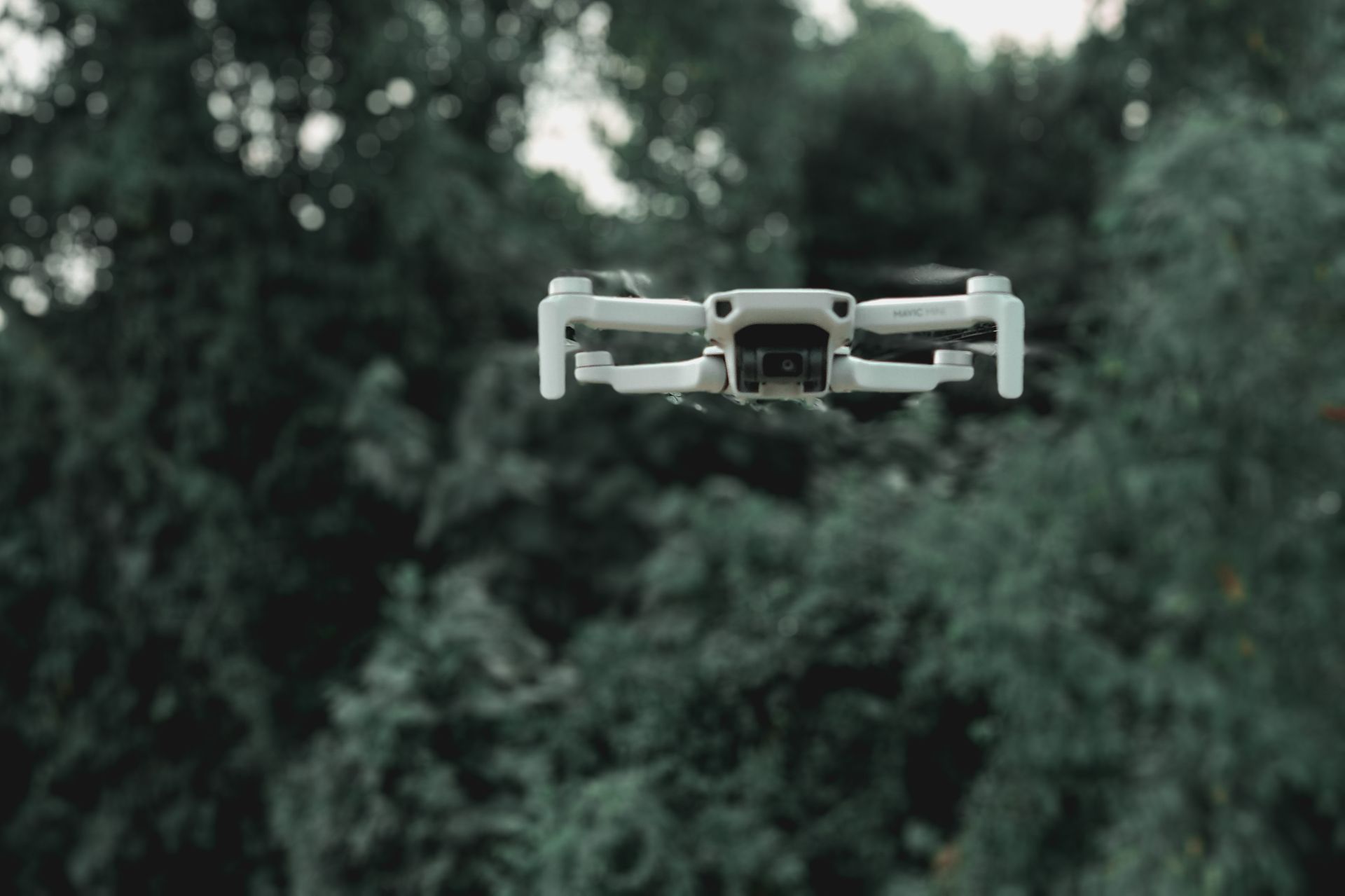
A small drone and a bird can look identical on a radar scope: same size, similar speed, similar track. Yet counter-drone radars routinely tell them apart. One of the main tools that makes this possible is the micro-Doppler signature — the fine frequency structure that moving parts add to the radar echo.
From Doppler to Micro-Doppler
Basic Doppler is simple: a target moving toward the radar shifts the returned signal up in frequency; moving away shifts it down. That bulk shift tells the radar how fast the whole target is approaching or receding, and it is the foundation of pulse-Doppler radar.
Real targets are not rigid points. A quadcopter’s body moves as one mass, but its propellers spin. A bird’s body translates, but its wings flap. A walking person’s torso moves steadily while their legs and arms swing. These secondary motions — rotation, vibration, oscillation — are called micro-motion, and each one adds its own small, time-varying Doppler shift on top of the bulk shift. That added structure is the micro-Doppler signature.
What the Signature Looks Like
A single Doppler measurement collapses all of this into one number, so micro-Doppler analysis works in time-frequency form instead. The radar collects a short burst of returns from the tracked target and builds a spectrogram: time on one axis, Doppler frequency on the other, brightness showing energy.
In that picture, different targets draw different patterns:
- A multirotor drone shows a strong central line from the body, surrounded by periodic sidebands from the rotor blades. Each blade flash — the moment a blade presents maximum radial velocity to the radar — repeats at the blade passage rate, producing evenly spaced, rhythmic structure. Four rotors at slightly different speeds layer several patterns at once.
- A fixed-wing drone shows weaker, steadier modulation from its single propeller, without the multi-rotor complexity.
- A bird shows a broad, roughly sinusoidal swing at the wingbeat frequency, rising and falling as the wings accelerate through each flap, often punctuated by glide intervals where the modulation nearly vanishes.
- A helicopter shows long blade flashes from its main rotor at a much lower rotation rate than a small drone’s propellers.
These patterns are stable enough that classifiers — from hand-crafted feature sets to neural networks — can learn them and label new tracks automatically.
What Shapes the Signature
Several factors determine how clear a micro-Doppler signature a given radar will see:
- Radar frequency. Doppler shift in hertz scales with carrier frequency for the same physical motion, so higher bands produce wider, more finely resolved signatures. This is one reason Ka-band sensors can excel at short-range classification, while X and Ku bands still capture micro-Doppler well at longer ranges.
- Observation time. Resolving a blade or wingbeat pattern requires watching the target through several rotation or flap cycles. Longer, coherent dwells give cleaner signatures; a fast-scanning radar revisiting the target briefly each scan must work harder.
- Aspect angle. A rotor viewed edge-on modulates the echo strongly; viewed along its spin axis, the radial motion of the blades largely disappears. Signatures vary as the target maneuvers.
- Signal-to-noise ratio. Micro-Doppler energy is a small fraction of the body return. At long range or against very small drones, the signature may sink below the noise before the track itself does.
- Target construction. Blade count, length, material, and rotation speed all shift the pattern — which is also why signatures differ between drone models.
How Counter-UAS Systems Use It
Micro-Doppler is not a detection method. The radar first detects and tracks a target using its bulk motion; micro-Doppler analysis then runs on the tracked target as a classification layer, answering “what is it?” after “where is it?” — the distinction laid out in detection vs identification vs classification.
In practice, the classification layer feeds several decisions:
- Bird versus drone filtering, the classic false-alarm problem in low-altitude surveillance — covered in depth in how radar distinguishes drones from birds.
- Drone-type estimation, such as multirotor versus fixed-wing, which hints at speed, range, and threat level.
- Priority and cueing, where a confident “drone” label raises the track’s priority and can steer an EO/IR camera for visual confirmation.
The classification result usually arrives as a confidence score rather than a verdict, and good systems combine it with track behavior — speed, altitude, maneuver — before alarming. The system-level view of this recognition chain, including its benefits and limits, is covered in micro-Doppler radar for counter-drone target recognition.
Limits to Keep in Mind
Micro-Doppler is powerful but not magic:
- It needs sufficient dwell on the target, so there is a real trade between wide-area update rate and classification quality.
- Aspect angles can erase the signature temporarily; a robust classifier tolerates gaps instead of flipping labels.
- Strong clutter, rain, or a distant small target can bury the modulation even when the track is solid.
- Hovering or slow drones keep their rotors spinning, which helps; but a drone in a fast dive presents a different aspect and may classify less confidently for a few seconds.
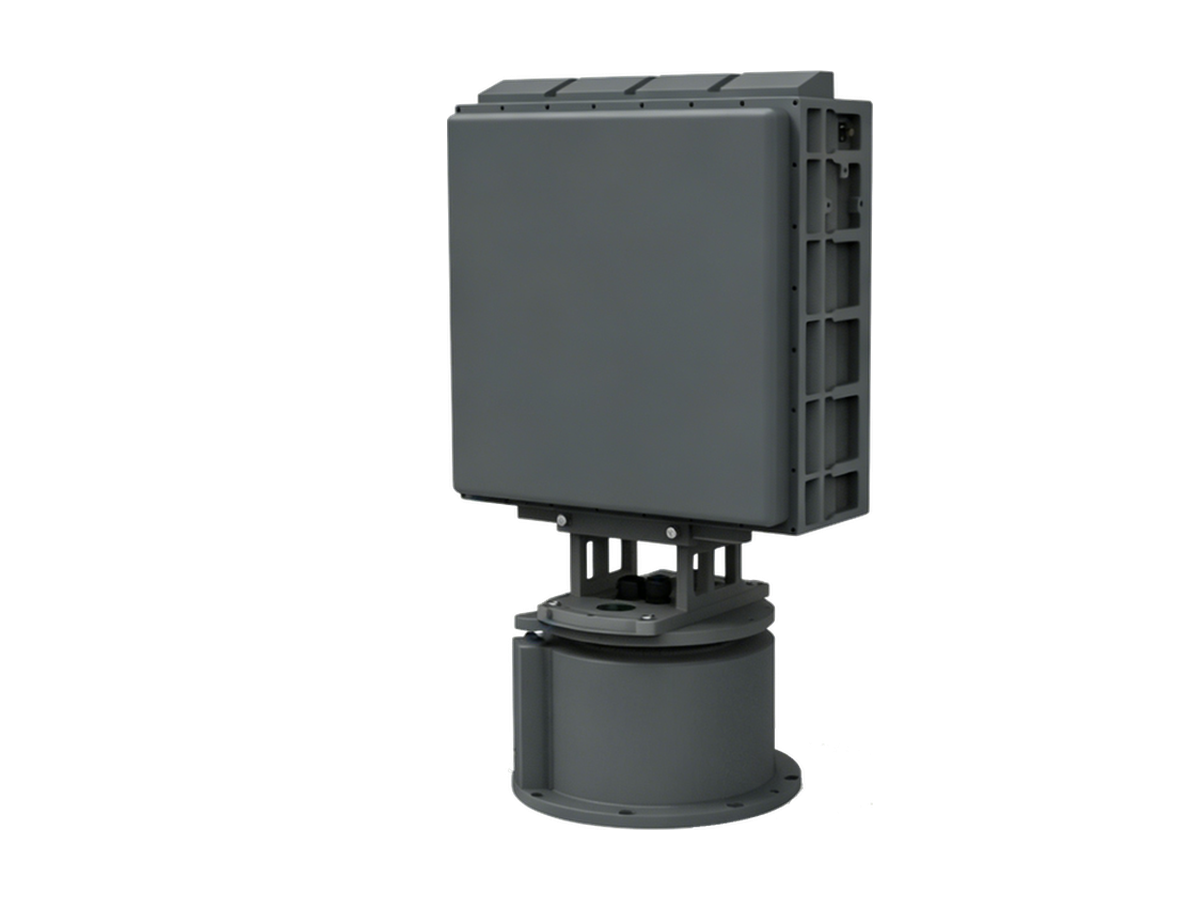
For buyers, this translates into concrete questions: how long does the radar dwell on a track before labeling it, how does classification confidence behave at the edge of coverage, and what happens to the label when the aspect angle changes. These are testable during acceptance, alongside the detection and tracking checks — and they differentiate a radar that merely finds targets from one that tells the operator what was found. Product lines designed for this full chain, such as the Cyrentis CR Series, pair detection and tracking with on-radar classification outputs for exactly this workflow.
Conclusion
A micro-Doppler signature is the fingerprint that micro-motion leaves in a radar echo: spinning propellers, flapping wings, rotating machinery, each writing its own pattern into the time-frequency picture. For counter-UAS radar, it is the bridge between detecting a small flying object and knowing what that object is.
Understanding where the signature comes from — and what strengthens or destroys it — clarifies both vendor claims and system design: frequency choice, dwell strategy, and classification software all decide whether “drone versus bird” is a confident answer or a coin flip.
Further Reading
Need Counter-Drone Radar for Your Site?
CR series low-altitude surveillance radars detect RCS 0.01 m² drones at 3–10 km and classify targets by micro-Doppler — every track outputs with target class and confidence.