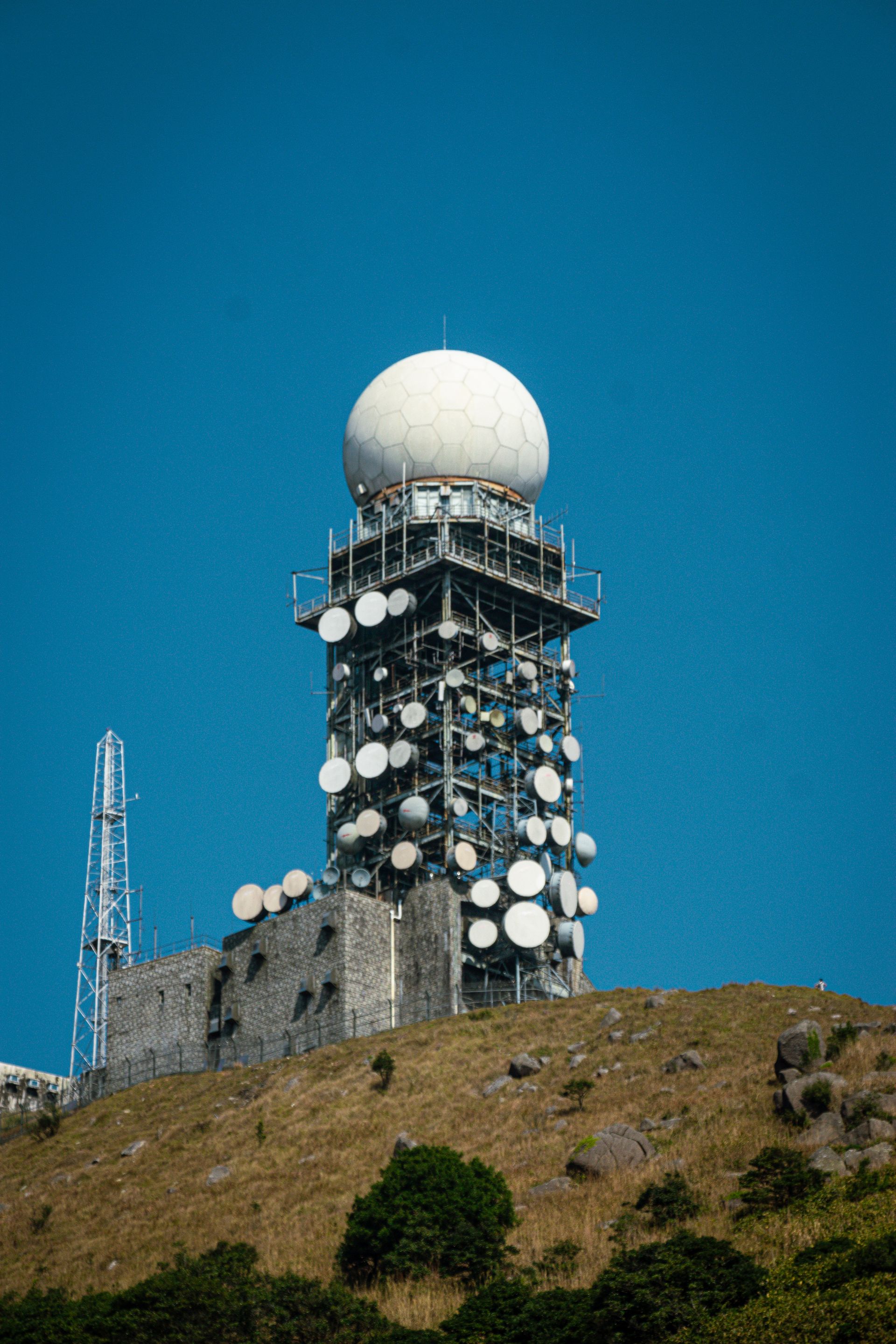
Buyers comparing counter-UAS radars eventually meet the band question. X and Ku dominate the market today, but Ka-band systems appear more often each year, usually promising finer resolution from a smaller antenna. The right choice depends on physics, weather, and the mission — not on which frequency sounds more advanced.
This article compares Ku band and Ka band for small-drone detection specifically. For the lower-frequency comparison, see X-band vs Ku-band radar for drone detection; for a wider sweep across bands, see C-band vs X-band vs Ku-band radar.
Where the Bands Sit
Ku band covers roughly 12-18 GHz, with a wavelength around 2 centimeters. Ka band covers roughly 27-40 GHz, with a wavelength under 1 centimeter — the lower edge of what engineers call millimeter wave.
Both bands sit above the crowded lower frequencies and below the absorption-heavy regions higher up. Between them, near 22 GHz, sits a water-vapor absorption peak that designers avoid. Ka band itself contains a favorable atmospheric window around 35 GHz, which is where most Ka-band radar work concentrates.
Neither band is reserved for radar. Ku is shared with satellite downlinks and uplinks; Ka is shared with satellite broadband and, at its lower edge, 5G millimeter-wave services. Exact radar allocations and licensing differ by country, which matters for export projects.
Antenna Size, Beamwidth, and Resolution
For a given antenna aperture, gain scales with the square of frequency. Moving from Ku to Ka therefore buys one of two things:
- a narrower beam and finer angular resolution from the same-sized antenna, or
- the same beam performance from a substantially smaller, lighter antenna.
This is Ka band’s headline advantage for compact systems. A short-range radar that must fit on a vehicle roof, a mast head, or even a drone payload can achieve usable beam performance without a large array.
Range resolution is set by signal bandwidth rather than carrier frequency, but higher bands make wide absolute bandwidth easier to realize within a reasonable fractional bandwidth. In practice, Ka-band sensors more often deliver the very fine range and Doppler resolution used for detailed target analysis.
Weather and Atmospheric Attenuation
This is where the comparison turns. Rain attenuation climbs steeply with frequency. In moderate to heavy rain, a Ka-band link loses energy far faster than a Ku-band link, and wet antenna surfaces add further loss. Ku band is not immune — heavy rain costs it range too — but the margin between the two widens quickly as rainfall rate increases.
The procurement consequence is direct. A radar specified to detect a 0.01 m² drone at 5 km in clear air may fall well short of that in a storm, and the shortfall is larger at Ka than at Ku. For sites where all-weather detection is the point of the system, the weather requirement should be written into the specification against a stated target size, as described in what RCS 0.01 m² means in drone detection.
Small-Drone Signatures and Classification
Doppler shift scales with carrier frequency. The spinning rotors of a small drone produce micro-Doppler sidebands that are roughly twice as wide in hertz at Ka band as at Ku band for the same blade motion. Wider, better-resolved signatures give classification algorithms more to work with when separating drones from birds.
The shorter wavelength also resolves smaller physical features — rotor blades, landing gear, payloads — which supports finer target discrimination at short range.
The trade-off is that this advantage plays out mainly at closer distances, where the weather and attenuation penalties have not yet eaten the link budget. Ka band’s classification strength and its weather weakness are two sides of the same frequency choice.
Component Maturity and Cost
Ku band benefits from decades of satellite communication volume: amplifiers, mixers, and antennas are mature, efficient, and relatively inexpensive. Ka-band components have improved rapidly — driven by LEO satellite broadband and 5G millimeter wave — but power amplifiers remain less efficient and more costly, and high-power Ka transmit chains are harder to build at a given price.
For a buyer, this shows up as system cost per watt of radiated power. Achieving long detection range at Ka band is possible; achieving it affordably, in all weather, is the difficult part.
Ku Band vs Ka Band at a Glance
| Aspect | Ku Band (12-18 GHz) | Ka Band (27-40 GHz) |
|---|---|---|
| Wavelength | ~2 cm | <1 cm |
| Antenna size for given gain | Moderate | Smallest |
| Angular resolution for given aperture | Good | Better |
| Rain attenuation | Moderate | High |
| All-weather range reliability | Strong | Weaker, needs margin |
| Micro-Doppler signature width | Baseline | ~2x wider, finer detail |
| Component maturity and cost | Mature, lower cost | Improving, higher cost |
| Typical counter-UAS role | All-weather detection and tracking | Short-range, high-resolution classification |
Which Band Fits Which Mission
Choose Ku band when the mission is continuous perimeter, border, or critical-infrastructure surveillance; the site experiences real rain; and the requirement is reliable detection and tracking of small drones at several kilometers. Ku is the proven sweet spot for all-weather small-drone detection, which is why product lines such as the Cyrentis CR-PK series build on it — from the 3 km CR-PK13C through the 8 km CR-PK14C, all specified against a 0.01 m² drone target.
Consider Ka band when the role is short-range and detail-focused: precise tracking near a protected point, classification support where micro-Doppler detail matters, or compact and mobile systems where antenna size is the binding constraint and the weather budget allows it.
Consider a division of labor. Some architectures detect and track at Ku or X band, then hand the track to a high-resolution sensor — a Ka-band radar or an EO/IR camera — for confirmation and classification. This uses each band where it is strongest instead of asking one frequency to do everything.
Where X Band Fits
Buyers weighing Ku against Ka should usually also weigh X band (8-12 GHz) on the other side. X band trades some resolution for still better weather penetration and longer practical range at a given power budget, and it anchors the long-range end of many counter-UAS portfolios. The X-band vs Ku-band comparison covers that trade in detail.
Conclusion
Ku band and Ka band are not rivals so much as tools for different weather and resolution budgets. Ka band concentrates resolution and classification detail into small apertures at short range; Ku band delivers dependable all-weather detection at the distances most perimeter and infrastructure missions actually require.
The useful procurement habit is to convert the band question into numbers: target RCS, required range in defined weather, aperture limits, and classification needs. A vendor who answers those numbers honestly — in either band — is easier to compare than one who argues frequency in the abstract.
Further Reading
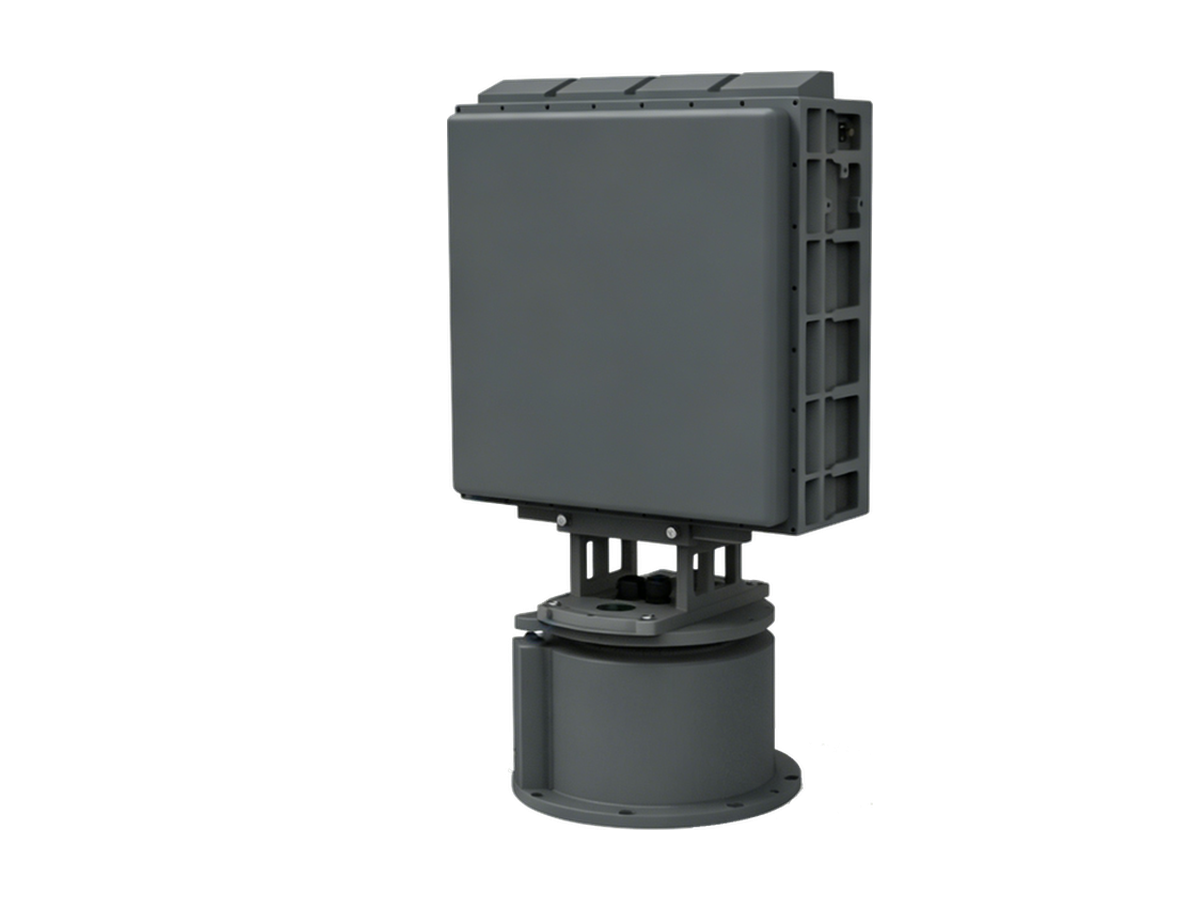
Need Counter-Drone Radar for Your Site?
CR series low-altitude surveillance radars detect RCS 0.01 m² drones at 3–10 km and classify targets by micro-Doppler — every track outputs with target class and confidence.