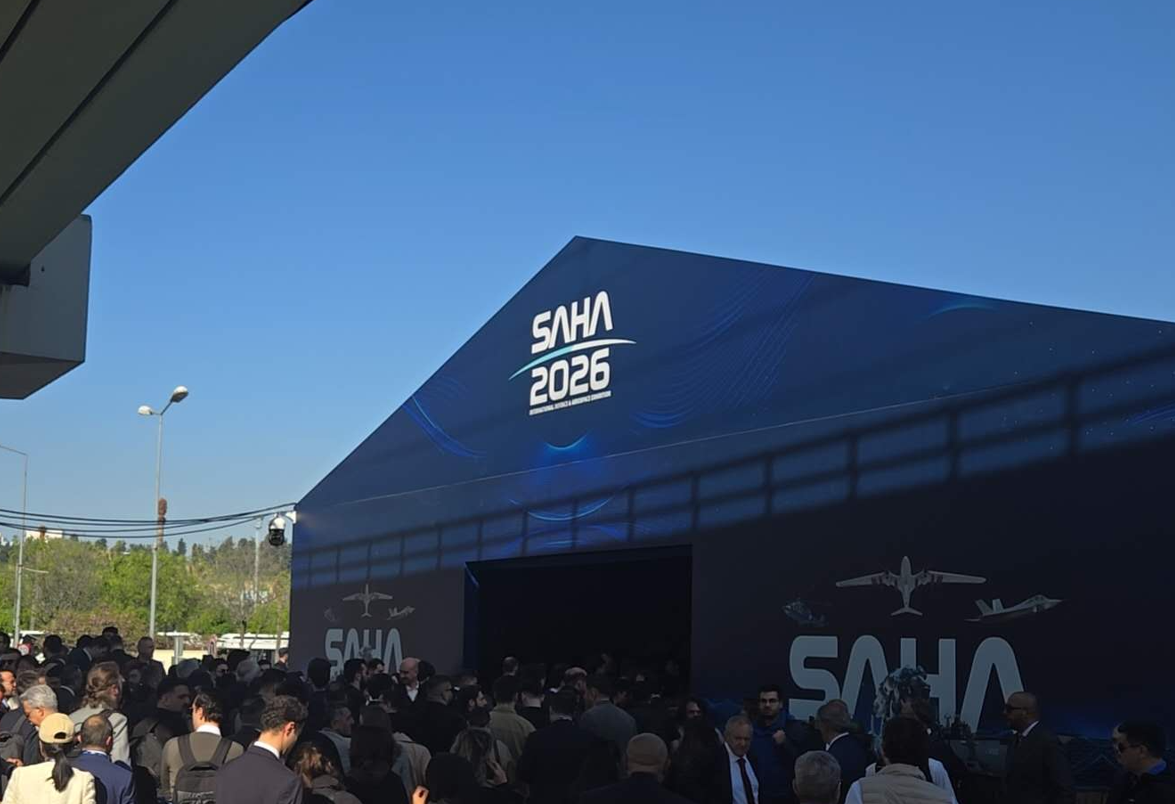
SAHA 2026 offered a concentrated view of how counter-UAS technology is being presented to real users: security teams, critical-infrastructure operators, government buyers, and system integrators who need more than a product brochure. The exhibition was held at the Istanbul Expo Center from May 5 to 9, 2026, with defense, aerospace, unmanned-system, air-defense, and electronic-warfare technologies on display.
The Cyrentis team visited the site to understand how advanced counter-drone technologies are being packaged for operational use. The most useful takeaway for users is not which display looked most impressive. It is how to judge whether a counter-UAS solution can help a site detect earlier, confirm faster, and respond through a clear workflow.
The onsite images in this article were taken by Cyrentis at SAHA 2026. They are used as visual references for technology categories and system-design ideas, not as product endorsements or performance claims.
Why SAHA 2026 Matters to Users
Counter-UAS is no longer a narrow category defined by one radar, one jammer, or one interceptor. At SAHA 2026, the broader direction was clear: serious drone-defense solutions are being presented as a chain of detection, classification, tracking, confirmation, decision, and response.
That shift matters because drone threats have diversified. A site may need to deal with consumer quadcopters, FPV drones, fixed-wing UAVs, kamikaze drones, silent autonomous profiles, or coordinated groups of small aircraft. A single technology rarely answers all of those cases. Radar may find a target early, RF may provide emitter or identity context, EO/IR may help confirm what the operator is seeing, and a response layer may only become relevant after the system has enough confidence and authority to act.
For users, this means the evaluation should start with the mission. A prison, airport, refinery, data center, public event, and border site may all need counter-UAS awareness, but they do not need the same configuration. The best solution is the one that fits the site’s warning time, terrain, response authority, evidence needs, and operator capacity.
Start With the Workflow, Not the Device
The strongest takeaway from the exhibition floor is simple: users should evaluate counter-UAS as a workflow before comparing individual devices.
A practical workflow asks five questions:
- What detects the target first?
- What keeps the track stable?
- What confirms the target or improves confidence?
- Who decides what the event means?
- What response is lawful, safe, and operationally appropriate?
Different vendors will answer those questions with different hardware. For the user, the important point is whether the full chain works. If a system cannot maintain track continuity, correlate evidence, and present a clear event to the operator, impressive components can still produce weak outcomes.
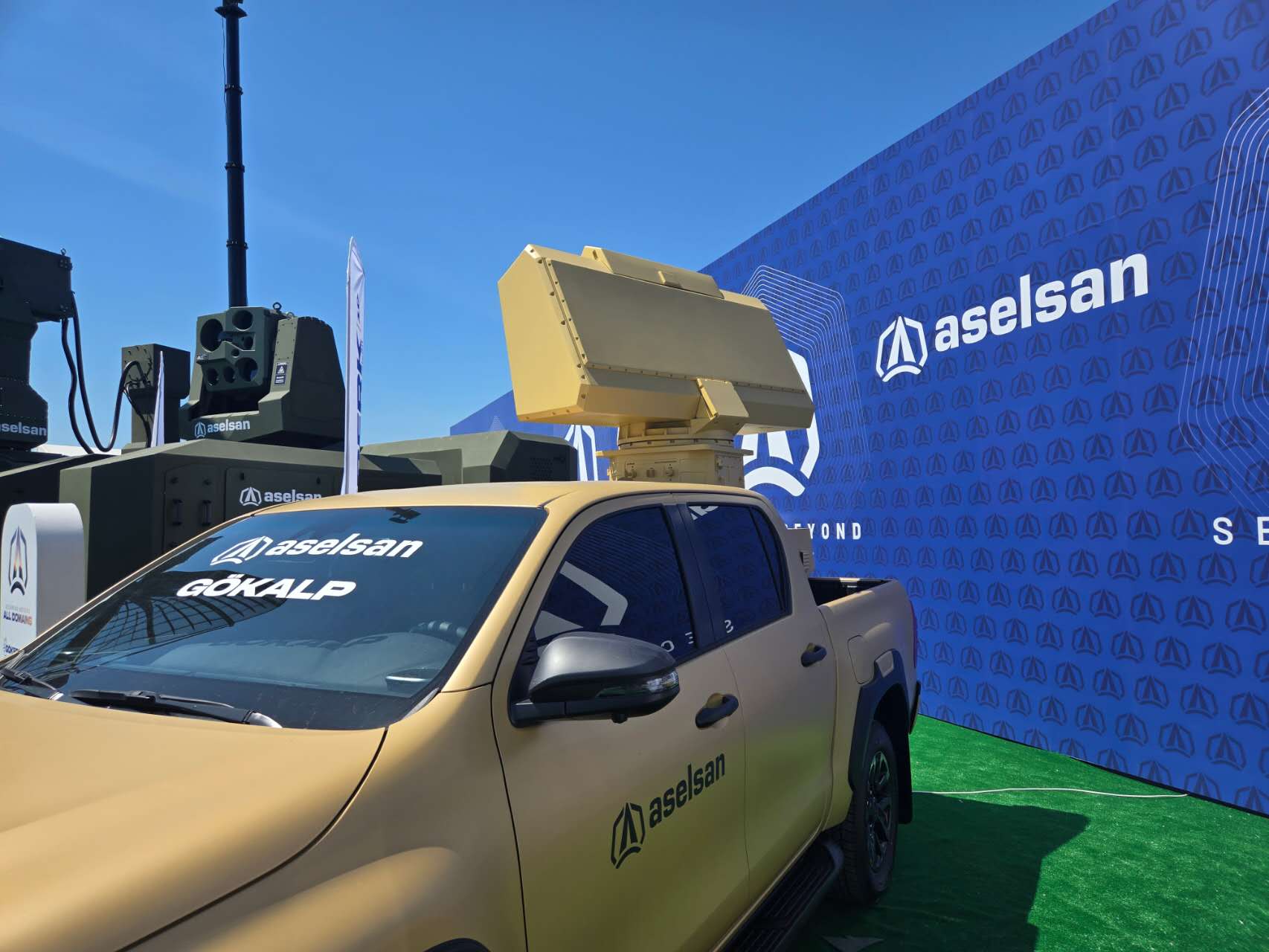
Figure: Cyrentis onsite photo of a counter-UAS vehicle display at SAHA 2026. For users, the question is how mobility, sensing, and response are packaged into one workable operating model.
This is especially important for civil security and critical-infrastructure planning. Most civil users cannot simply copy a military defense display. They need to translate the logic into their own site boundaries, response authority, airspace coordination, safety rules, data retention needs, and operator workload.
Detection Still Starts the Chain
At every counter-UAS exhibition, response systems attract attention. Lasers, high-power microwave systems, kinetic interceptors, and anti-drone launchers are visually memorable. But SAHA 2026 reinforces an older truth: response systems still depend on detection and tracking.
If the system does not detect early enough, response time collapses. If the track is unstable, the operator cannot trust the event. If the target cannot be associated with an airspace zone, schedule, or protected asset, the system may not know whether the event matters.
Radar remains central because it observes physical movement. A radar can contribute early warning even when the drone is visually small, distant, or difficult to hear. It can also provide track continuity that helps cue other sensors. But radar is not a complete answer by itself. Users should still ask about placement, clutter handling, latency, and integration with confirmation layers.
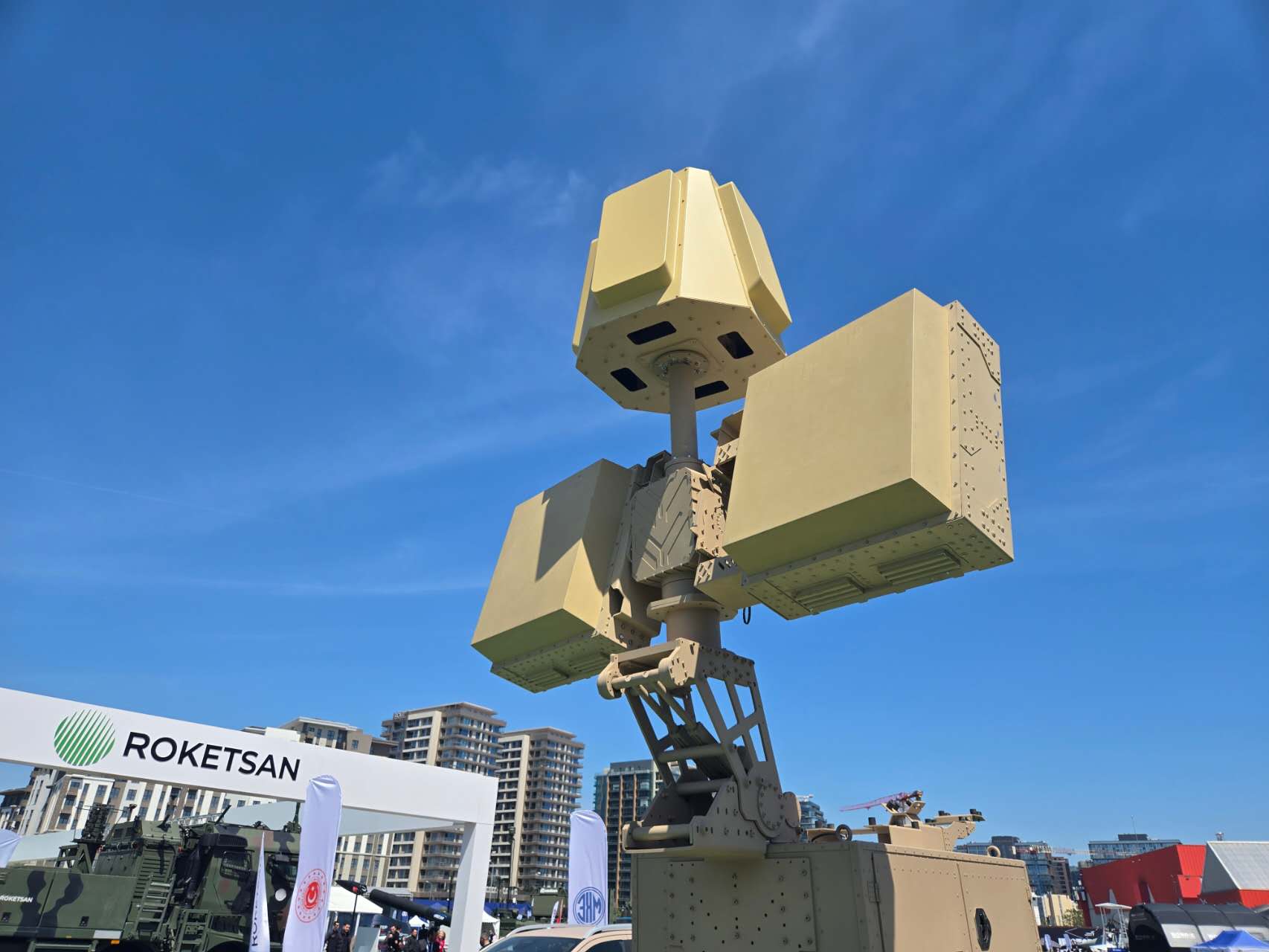
Figure: Mobile sensor and radar-style display observed at SAHA 2026. Mobile deployments show why users should ask about sensor height, line of sight, stabilization, and handoff timing.
For planners, the first design question should not be “which response technology is most dramatic?” It should be “what gives the site enough reliable time to understand the event?”
Match Each Sensor to a Clear Job
SAHA 2026 also shows why sensor fusion is not the same as sensor accumulation. Adding more devices does not automatically create better situational awareness. Each sensor must have a clear job.
In a typical counter-UAS stack:
- Radar provides wide-area detection, position, velocity, and track continuity.
- EO/IR provides visual or thermal confirmation and evidence.
- RF detection provides emitter context when the drone or controller is transmitting.
- Remote ID reception may provide cooperative identity data where compliant broadcasts are present.
- Command software associates events, prioritizes alerts, supports operator decisions, and preserves records.
The practical problem is not just connecting those feeds. The problem is deciding when two observations are the same event, how confidence changes, and when the operator should be interrupted.
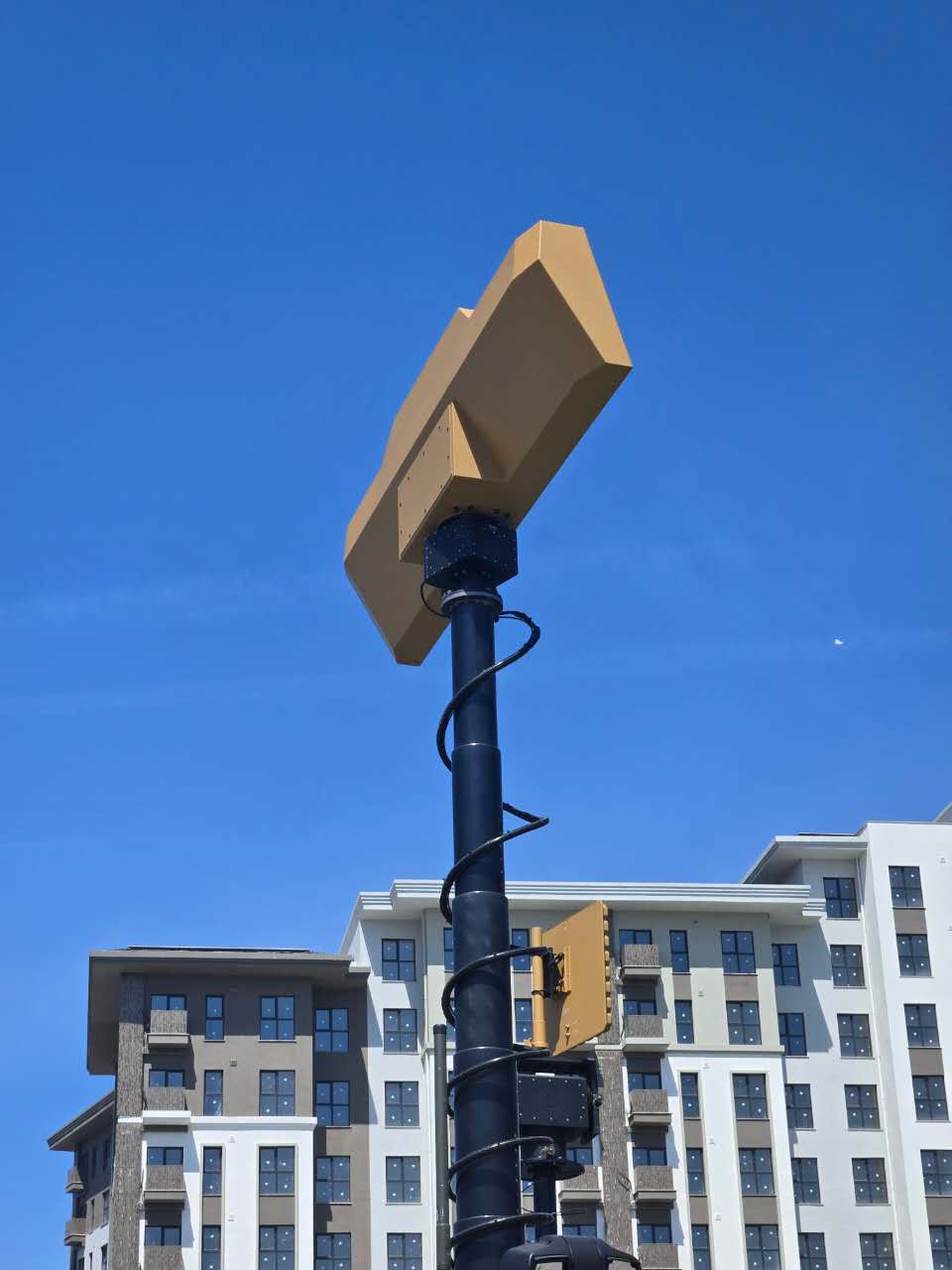
Figure: Close-up of a radar-style panel display photographed at SAHA 2026. In system planning, panel geometry is only one part of the question; placement, update behavior, and integration determine operational value.
This is where many projects fail quietly. They buy capable sensors, but the operator still has to reconcile multiple screens manually. A better architecture turns separate observations into one event story: where the object came from, how confidence changed, which sensor confirmed it, and what response path applies.
Treat Response as a Site-Specific Choice
Industry coverage from SAHA 2026 reported new and updated counter-UAV and electronic-warfare capabilities, including electronic attack systems, high-power electromagnetic concepts, laser systems, autonomous kinetic interceptors, and close-range protection tools. That mix reflects a broader trend: the response layer is diversifying because drone threats are diversifying.
The key planning lesson is not that every site needs every response type. It is that response must be matched to mission, authority, geometry, and safety.
Soft-kill approaches may try to disrupt links, navigation, or electronics. Hard-kill approaches may physically intercept or damage the target. Directed-energy approaches may offer precision in some scenarios but still require tracking, line of sight, safety control, and rules of engagement. Kinetic interception may be useful for certain fast-moving or non-cooperative threats but requires its own launch, tracking, and debris-risk logic.
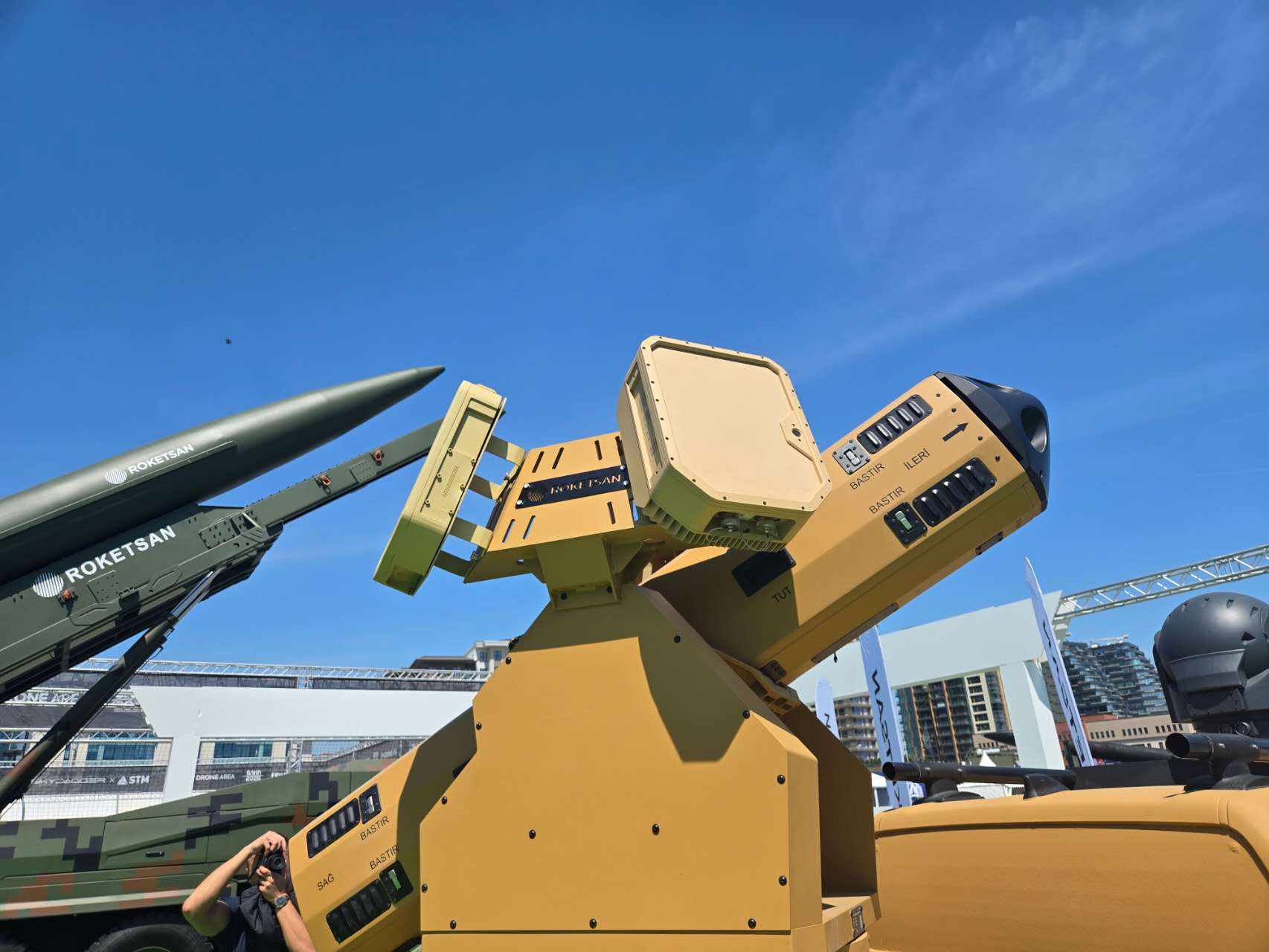
Figure: Counter-UAS launcher display photographed at SAHA 2026. Response tools are most meaningful when upstream sensing, cueing, safety rules, and operator authority are already defined.
Civil sites should be especially careful here. In many jurisdictions, mitigation authority is limited. For airports, data centers, ports, event venues, energy sites, and industrial facilities, the most realistic value may be earlier detection, better confirmation, evidence capture, and clean escalation to the responsible authority. A response tool without legal and operational authority is not a complete counter-UAS capability.
Ask Whether Mobility Is Needed
Another visible theme at SAHA 2026 was mobility. Vehicle-mounted radars, mast-mounted sensors, and integrated mobile packages matter because many security missions are temporary, distributed, or terrain-limited.
Mobility changes design priorities. A mobile system must answer questions that fixed installations can sometimes avoid:
- How quickly can the system establish its coordinate reference?
- What happens when the mast height changes line-of-sight coverage?
- Can the operator verify blind sectors quickly?
- How are power, networking, and data recording handled during relocation?
- Can the mobile layer hand off tracks to fixed sensors or command centers?
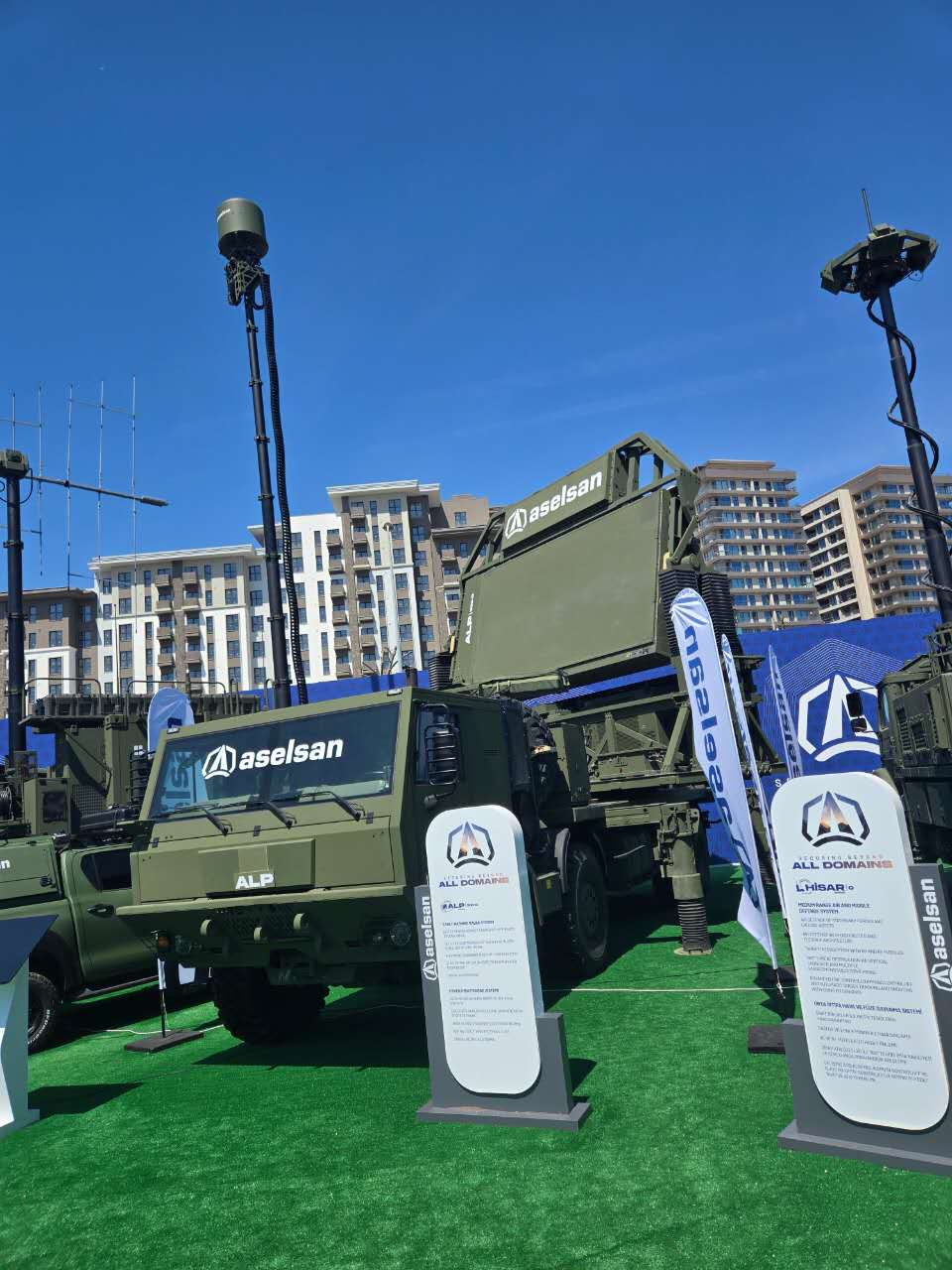
Figure: Air-defense and radar display photographed at SAHA 2026. Mobile and deployable systems highlight the need to plan coverage, command links, and escalation paths together.
For civil low-altitude security, mobility is valuable for major events, emergency deployments, temporary construction protection, border sectors, coastal sites, and gap coverage during maintenance. But mobility also increases the need for site survey discipline. A mobile radar placed in poor geometry can underperform a smaller fixed system placed well.
What Users Can Learn From the Displays
Cyrentis attended SAHA 2026 to understand the direction of current global counter-UAS technology and compare it with practical low-altitude security projects. For users visiting similar exhibitions, the most useful questions are often architectural rather than cosmetic.
When looking at a counter-UAS display, ask:
- Is this a standalone device or part of an integrated workflow?
- Which layer detects first, and which layer confirms?
- How do radar, EO/IR, RF, and response layers share data?
- How does the system behave when it is deployed temporarily or moved to a new site?
- What does the operator actually see during an alert?
That last point matters. In real projects, counter-UAS performance is often judged in the control room rather than on the exhibition floor. Operators need to know which event matters, which sensor saw it, whether confidence is improving, and what they are allowed to do next.
Translating Exhibition Displays Into Civil Site Planning
Exhibition systems are designed to show capability. Site designs must turn capability into reliable operation. The translation usually involves five steps.
Define the Protected Mission
A prison, airport, refinery, data center, port, border sector, and public event do not share the same risk profile. The mission defines what counts as a relevant drone event, how much warning time is required, and what escalation path is realistic.
Separate Awareness From Confirmation
Early awareness and final confirmation are different jobs. Radar or RF may create the first event, while EO/IR helps the operator verify it. Treating one layer as a replacement for the other often creates either late warning or weak evidence.
Plan the Handoff
The system should specify how one layer cues another. A radar track that cannot slew a camera, associate with a map zone, or reach the operator with enough time is not fully useful. Handoff timing is as important as headline detection range.
Decide Evidence Thresholds
Projects should define what evidence promotes an event from “observe” to “investigate” to “escalate.” Without thresholds, different operators may treat the same alert differently.
Test Degraded Modes
Every sensor layer has limits. EO/IR can be affected by fog, glare, and line of sight. RF can be weak when the target is silent or the spectrum is crowded. Radar can be affected by clutter, masking, and siting. A mature design shows operators what evidence is missing instead of pretending the remaining layer tells the whole story.
Used this way, an exhibition like SAHA 2026 becomes more than a showcase. It helps users ask better questions before procurement: what the site needs to know, how quickly it needs to know it, and how the system helps people make the next decision.
Related Reading
- SAHA 2026 Official Press Release
- SAHA 2026 Visiting Hours
- Anadolu Agency: ASELSAN debuts counter-drone and electronic warfare systems at SAHA 2026
- DHS: Counter-Unmanned Aircraft Systems
- What is Counter-UAS?
- Radar + EO + RF Integration Guide
- Layered Radar Architectures: What Civil Security Planners Can Borrow