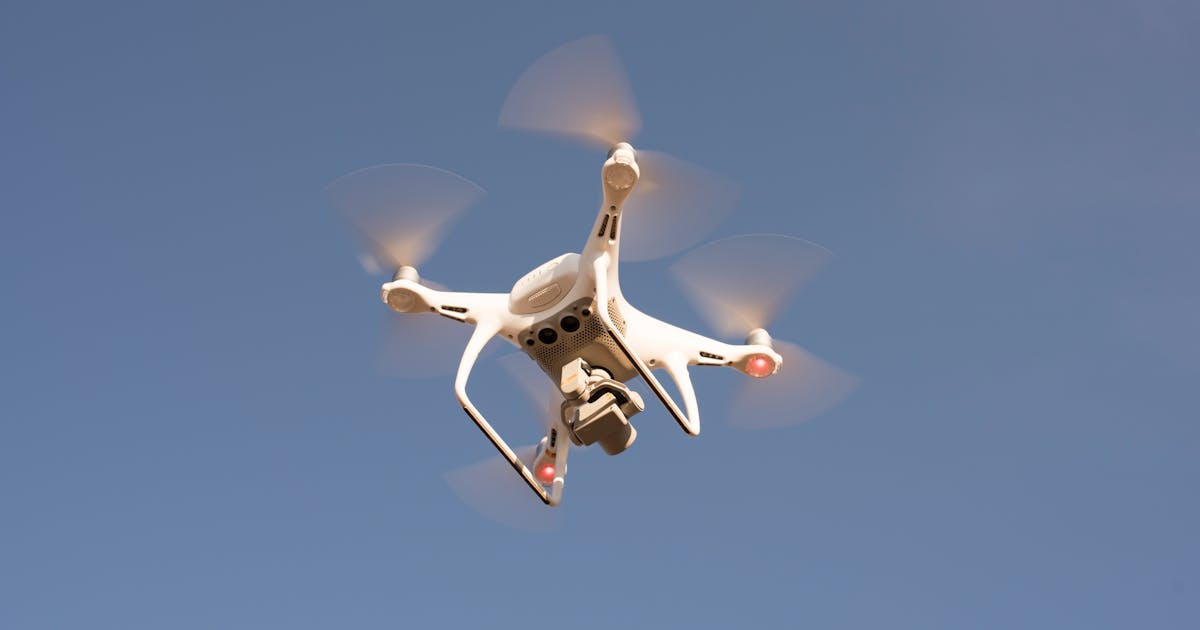
Small drones are difficult to detect by radar because they sit near the edge of several radar design problems at the same time. They are physically small, often built from low-reflective materials, fly at low altitude, move in irregular ways, and operate inside environments full of clutter. A radar may detect a large aircraft against open sky with relative ease, but a compact quadcopter near buildings, trees, vehicles, or water is a different problem.
This does not mean radar is the wrong tool. Radar remains one of the most important sensing layers for low-altitude security because it can search continuously, measure range and movement, and operate day and night. The point is that small-drone detection requires the right radar architecture, the right site design, and the right workflow after detection.
For buyers and integrators, the useful question is not simply “Can radar detect drones?” The better question is: “Can this system detect and track the specific small drones that matter at this site, in the sectors where they are likely to appear, with enough confidence and warning time for the operator?”
Small Size Means Weak and Changing Returns
Radar detects objects by transmitting radio energy and analyzing the energy that returns. A small drone usually reflects less energy than a larger aircraft because it has less physical area and often uses plastic, composite, carbon-fiber, or lightweight structures. The result is a smaller and less stable return.
The return is also not constant. A drone can look different to the radar as it turns, pitches, carries a payload, folds its arms, or presents a different aspect angle. The same aircraft may be more visible from one direction and less visible from another. A small multirotor with exposed motors may behave differently from a foam fixed-wing drone or a compact racing drone.
That is why one universal “small drone detection range” can be misleading. Range depends on target size, radar cross section, orientation, frequency band, waveform, antenna design, processing, clutter, and site geometry.
Low Altitude Puts the Target in Clutter
Small drones often fly close to the ground or near structures. That places them in the most complicated part of the radar scene. Instead of being seen against clean sky, they may appear near roof edges, fences, trees, cranes, roads, parked vehicles, waves, or terrain.
This matters because radar does not only see the target. It also sees reflections and movement from the environment. Buildings create strong reflections. Trees move in wind. Water surfaces change constantly. Vehicles and people can create legitimate moving objects. Birds may occupy the same altitude band.
The practical challenge is separation. The radar must keep the drone while suppressing enough background to avoid constant false alarms. If filtering is too loose, operators receive too many alerts. If filtering is too strict, slow or weak drones may disappear.
Slow or Hovering Flight Can Be Harder Than Expected
Many people assume that a slow object is easier to detect. In radar, slow movement can sometimes be harder to separate from background effects. Doppler processing helps distinguish moving targets, but a hovering drone, a tangential flight path, or a slow approach with little radial speed may offer weaker motion cues.
Rotor motion can help in some conditions, but it is not a guaranteed answer. Micro-Doppler features depend on radar design, range, aspect angle, signal quality, and processing approach. A system should not be selected on the assumption that rotor signatures will solve every classification problem.
This is one reason track quality matters. A single detection point is less useful than a stable track that shows where the object is moving, how quickly, and whether it is entering a protected zone.
The Site Can Matter as Much as the Radar
A strong radar can still underperform if it is installed in the wrong place. Mounting height, blocked sectors, nearby metal structures, rooflines, trees, and terrain can all shape low-altitude coverage.
For example, a radar placed too low may lose line of sight behind buildings. A radar facing a busy road may need careful sector rules to avoid nuisance alerts. A coastal radar may require different tuning than a data-center perimeter radar because waves and boats create a different background.
This is why real planning should include a site survey, coverage expectations by sector, and realistic test paths. A clean open-field demonstration is useful, but it does not prove performance in every operating environment.
Detection Is Not the Same as Operational Value
Radar performance is often discussed as detection range, but operational value depends on what happens after detection. The system must decide whether a weak target is real, whether it matters, whether it is inside a sensitive zone, and whether it should trigger a camera or operator action.
A practical low-altitude security workflow usually includes:
- radar detection and track formation,
- zone-based alert logic,
- confidence scoring or event filtering,
- EO/IR or visual confirmation,
- operator queueing,
- and event logs for review.
Without that workflow, a radar may produce points on a screen without giving the security team a clear decision.
What Buyers Should Ask
When evaluating radar for small-drone detection, ask for more than a maximum range number. Useful questions include:
- What target size and radar cross section is the range based on?
- Is the target approaching, crossing, hovering, or receding?
- What altitude and background were used in testing?
- How does the system handle trees, birds, vehicles, water, and buildings?
- Can it maintain a track long enough to cue a camera?
- What false-alarm behavior should be expected at a real site?
- How is the radar integrated with the command platform and operator workflow?
The most honest answers are usually conditional, because small-drone detection is conditional. A good supplier should be able to explain those conditions clearly.
Conclusion
Small drones are hard radar targets because they combine weak signature, low altitude, irregular motion, clutter, and short warning time. Radar can address the problem, but only when it is designed, placed, tuned, and integrated around the real operating environment.
For a serious counter-UAS project, success is not just seeing a drone once. Success is maintaining a useful track, reducing false alarms, confirming the event, and giving the operator enough time to make the right decision.